The announcement by Yaoundé of a railway route linking Cameroon to Chad has sparked a sharp reaction from N’Djamena, laying bare the tensions in regional infrastructure projects. This disagreement highlights more than just technical flaws—it underscores the deep economic, geopolitical, and territorial stakes tied to this cross-border venture that could reshape trade flows between the two nations and beyond.
a contested railway route through central Africa
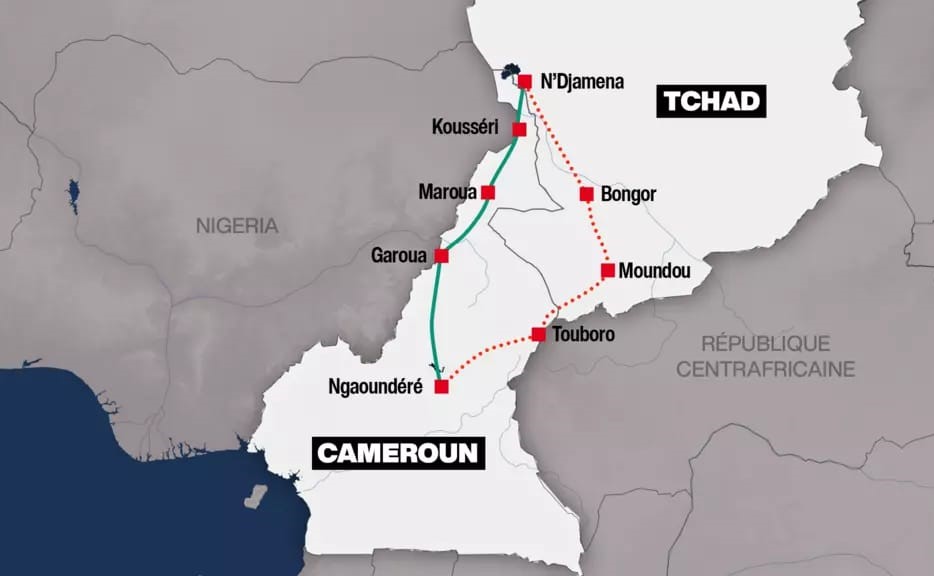
On June 4, Cameroon’s presidential steering committee approved a 900-kilometer railway corridor designed to connect Ngaoundéré to N’Djamena, passing through key cities such as Garoua, Figuil, Maroua, and Kousséri before crossing into Chad. According to Cameroonian authorities, this route represents the most viable option on economic, technical, and territorial grounds, positioning Cameroon as a maritime gateway for landlocked Central Africa.
The announcement, however, was met with immediate pushback from Chad. In an official statement, Chad’s Ministry of Transport emphasized that no final route had been jointly endorsed by both countries. N’Djamena argued that several alternatives were still under consideration, calling Yaoundé’s decision premature. This dispute reveals the persistent challenges in managing transnational projects across the region, where unilateral decisions often clash with collective interests.
why this railway project matters for central Africa
This rail link is more than just an infrastructure project—it is a cornerstone for regional integration. Once operational, the line will connect Cameroon’s existing rail network to Chad, a landlocked nation that currently relies on the Douala-N’Djamena corridor for over 80% of its external trade. The project aligns with the Central African Economic and Monetary Community’s (CEEAC) strategy to develop multimodal corridors, with an estimated cost running into billions of dollars.
The railway is expected to revolutionize the movement of goods, including hydrocarbons, cotton, livestock, cereals, construction materials, and containerized cargo from ports like Douala and Kribi. Proponents argue it will slash logistics costs, enhance competitiveness, and streamline trade across the Cameroon-Chad basin. For landlocked Chad, the project could reduce its dependency on road transport, which is plagued by high maintenance costs and climate-related disruptions.
economic stakes fuel disagreements over the rail route
While the debate centers on technical specifications, the real issue is economic advantage. Cameroon’s proposed route prioritizes the development of its northern regions, including cities like Garoua, Maroua, and Kousséri, by integrating them into a broader logistics and industrial network. This aligns with Yaoundé’s vision of territorial planning and economic diversification.
Chad, however, views the route as skewed in favor of Cameroon. N’Djamena has pushed for alternative alignments that would better serve its own agricultural and productive zones, ensuring that the corridor’s benefits extend beyond the capital. This divergence reflects a broader pattern in regional projects: each nation seeks to maximize gains within its borders. The choice of route will determine the distribution of economic opportunities for decades to come, including the location of future investments, logistics hubs, and industrial zones.
regional cooperation at risk
This dispute is a stark reminder of the hurdles facing regional integration in Central Africa. Despite commitments to cooperation, major infrastructure projects often follow national priorities rather than shared objectives. International best practices show that successful regional infrastructure relies on collaborative governance from the outset—where financing, route selection, technical standards, and operational models are agreed upon collectively to ensure political buy-in from all stakeholders.
Without such coordination, the risks of delays, cost overruns, or even project abandonment loom large. The Cameroon-Chad railway dispute arrives at a critical juncture, as African nations increasingly prioritize cross-border connectivity to boost trade and economic resilience. The outcome of these talks could set a precedent for future infrastructure ventures in the region.