
PSG vs Arsenal final: was Bukayo Saka’s handball a penalty for the Parisians?

A disastrous start for Paris Saint-Germain. Despite dominating possession in the first 15 minutes (78% to 22%), the French side found themselves trailing Arsenal 0-1 in Saturday’s final in Budapest. The Parisians had conceded early after Marquinhos’ misplaced clearance allowed Leandro Trossard to inadvertently set up Kai Havertz, who raced into space. On the left flank, the German striker then took on Matvey Safonov before unleashing a thunderous shot under the crossbar (5th minute).
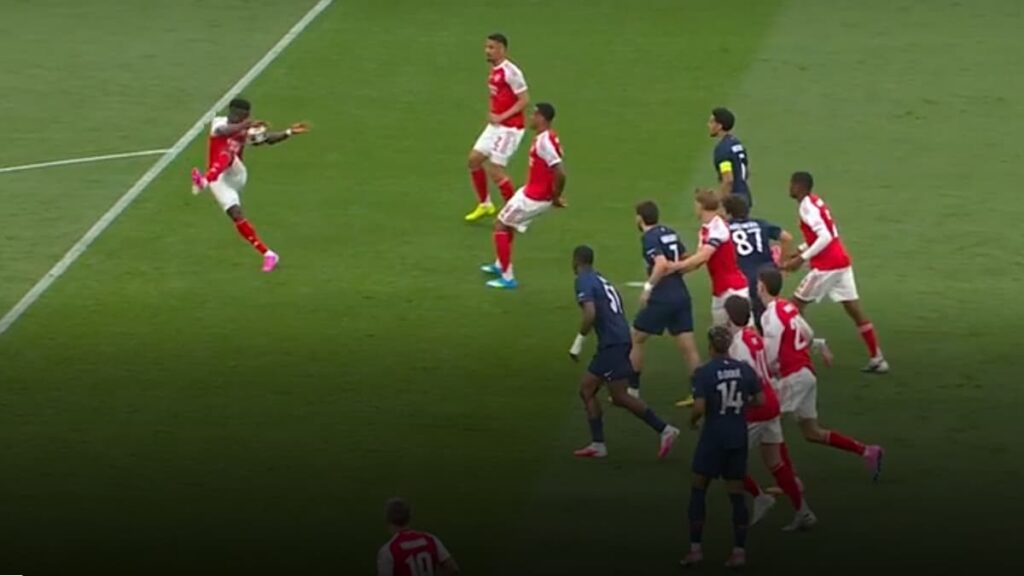
Moments later, the reigning champions thought they had a penalty shout. Just after the quarter-hour mark, Bukayo Saka received a corner from Ousmane Dembélé. The England international, positioned near the edge of the box, deflected the ball with both arms before making a third touch with his hand. The Parisians immediately protested, but to no avail. Referee Daniel Siebert of Germany did not award the penalty, and the VAR did not intervene.
Did Saka artificially increase the area covered by his body?
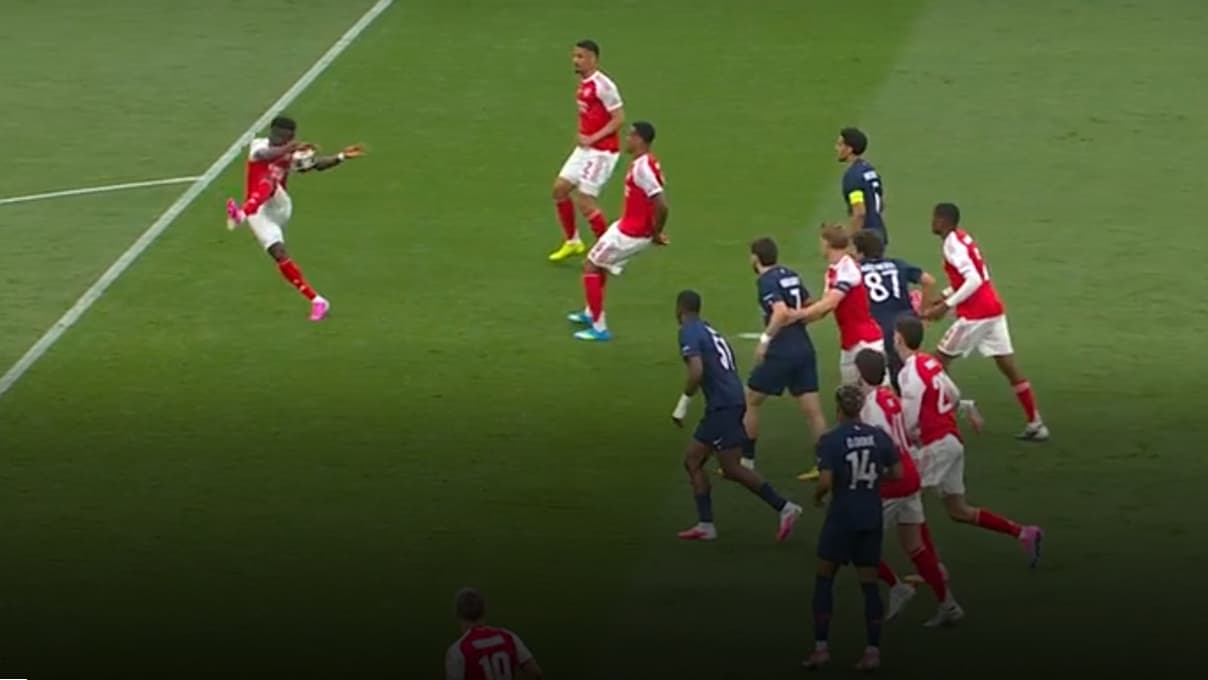
According to IFAB’s Laws of the Game, not every contact between the ball and a player’s arm or hand constitutes an offense. A foul is only given when the contact is deliberate or if the player artificially increases the area covered by their body. The latter applies when the hand or arm’s position is not a natural consequence of the player’s body movement in that specific situation. In Saka’s case, his arms were clearly away from his body, suggesting the officials deemed his positioning justified by the attempt to clear the ball.
Nevertheless, the no-call sparked fierce debate online. Some fans argued: “He touched the ball with his hand 27 times in two seconds—what’s going on?” or “The guy’s juggling with his hands—how is this allowed?” Others disagreed, stating: “He made it look easy, just like Neves’ handball in Munich” or “There was nothing wrong here—hard to call a handball.” By halftime, despite a few chances, Paris Saint-Germain had failed to equalize.