Polisario faces military and diplomatic setbacks against Morocco

The Polisario Front continues to advocate for dialogue with Rabat despite the death of a key leader in a Moroccan strike. This contradictory stance underscores the movement’s military inferiority and growing diplomatic isolation.
The recent killing of Lahbib Mohamed Abdelaziz, a prominent figure in the Sahrawi army and son of a former Polisario president, has starkly exposed the harsh realities on the ground. Struck by a precision-guided munition during a withdrawal operation, his death adds to the mounting toll of drone strikes that have claimed dozens of lives in recent years. While the movement has long relied on outdated Spanish-modified Land Rovers, Morocco’s technological edge has tipped the scales decisively in its favor. Jalil Mohamed Abdelaziz, the Polisario’s delegate in Madrid, admits the painful cost of defending their cause, calling it “an unbearable burden.”
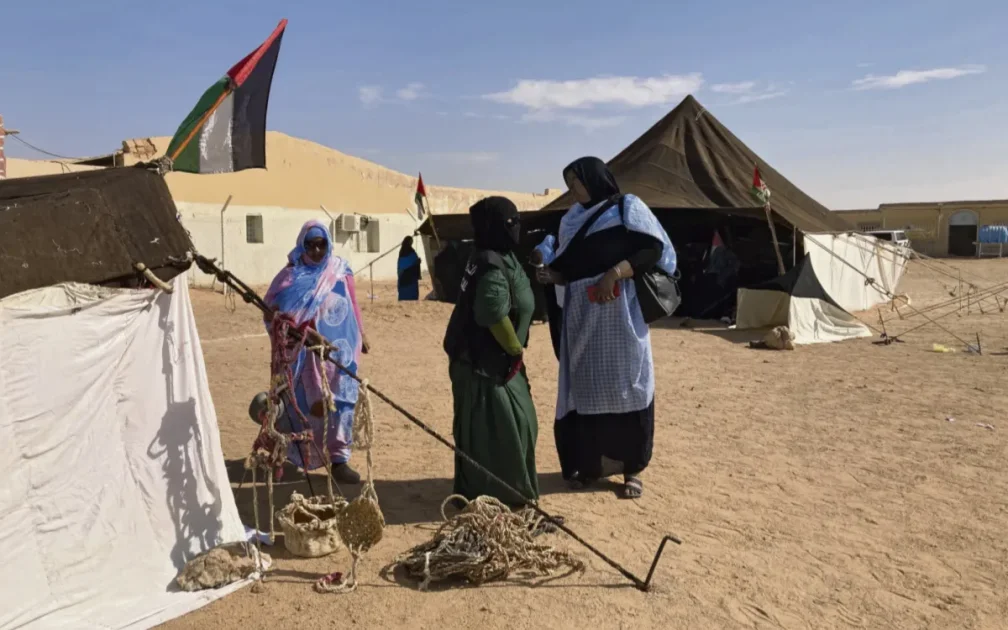
Despite these crushing setbacks, the separatist group clings to a paradoxical strategy. Abdoullah Arabi, the movement’s representative in Spain, insists that “dialogue remains an option in all circumstances,” refusing to abandon bilateral talks. This ambivalent approach was evident in April from the Algerian region of Tindouf, where 175,000 people reside in refugee camps. Brahim Ghali, the group’s leader, tempered his rhetoric, pledging to act as a peaceful partner while demanding compliance with UN resolutions.
This tactical inconsistency stems from growing international isolation. With limited global geostrategic significance, Morocco has successfully won over major Western powers, including the United States and France. Even Spain shifted its position in 2022 when its prime minister endorsed Morocco’s autonomy plan as the most credible solution. Abdoullah Arabi condemned this turnaround, accusing Madrid of turning a blind eye to Sahrawi suffering.
Geographically, the Polisario’s predicament is further compounded by a fortified sand berm built in the 1980s. Stretching across the 250,000-square-kilometer territory, this imposing barrier divides the region, leaving most of the coastal zone under Moroccan control. Trapped in the remaining 20% of inland territory, the separatists face an insurmountable obstacle. Despite Aminatou Haidar’s claims of unwavering popular resolve, the movement’s survival now hinges on outmaneuvering Morocco’s overwhelming military machine.