Ousmane Sonko recadre les contestataires et fixe le cap
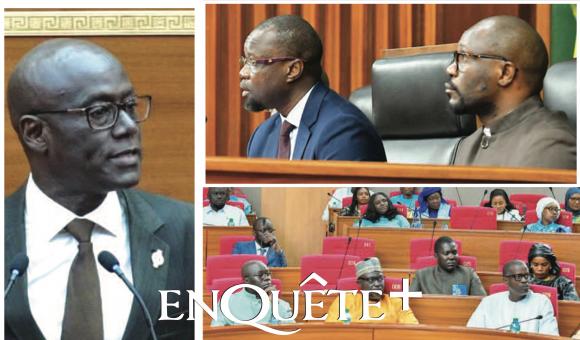
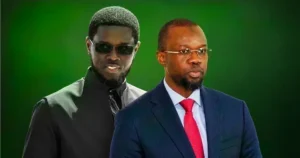
Amidst a backdrop of criticism and dissent surrounding the convocation of the National Assembly’s extraordinary session, President Ousmane Sonko stepped forward this Monday to delineate the legal framework for the proceedings, detail the legislative agenda, and address what he termed as misrepresentations. With five key legislative texts slated for review and the establishment of six investigative commissions, the debates are poised to be intense, fueled by sharp attacks from opposition figures such as Thierno Alassane Sall and the outspoken ministerial advisor to the President of the Republic, Aldiouma Sow.
Five major legislative proposals on the parliamentary agenda
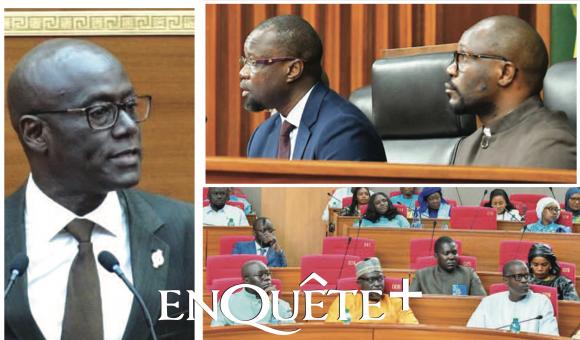
Ousmane Sonko initiated the proceedings yesterday, presiding over the plenary session that marked the opening of the first extraordinary session of 2026. He challenged his detractors, asserting that Parliament would fully execute its mandate. The agenda for this session revolves around five significant bills and proposed laws. Three originate from the government, while two are parliamentary initiatives. Deputies are set to scrutinize Bill n°15-2026 concerning the Labor Code, Bill n°16-2026 pertaining to the Social Security Code, and Bill n°25-2026 addressing the protection of critical infrastructure and digital security.
However, particular attention is drawn to Proposed Law n°33-2026, which seeks to amend Article 37 of the Constitution, and Proposed Law n°34-2026, related to the legal framework for special credits. Both of these proposals will undergo an urgent procedure at the request of their sponsors, with the detailed work schedule to be determined by the Conference of Presidents.
Six investigative commissions under scrutiny
Concurrently, the session is tasked with approving the formation of six parliamentary investigative commissions. Their inquiries will target highly sensitive issues, including deficiencies in land management, the disposal of state-owned heritage properties, and the utilization of financial mechanisms such as TRS.
Parliamentarians also intend to shed light on irregularities within the “One student, one computer” program, revenue shortfalls, the oversight of tax exemptions, and the terms for granting and renewing fishing licenses.
A two-speed timeline: “commissions have six months”
Regarding these commissions, Ousmane Sonko unequivocally clarified their operational duration. “It has never been stated that the parliamentary investigative commissions would convene and complete their work within fifteen days,” he asserted. In accordance with Article 55 of the internal regulations, each commission will comprise a maximum of eleven deputies, appointed proportionally across parliamentary groups. Once the resolution is ratified in plenary by an absolute majority and without debate, the commission will elect its leadership, consisting of a president, two vice-presidents, and a rapporteur.
“They will have six months, a maximum of six months, to carry out their work and submit their report to the Bureau of the National Assembly,” the President of the National Assembly emphasized, reminding all that Article 58 allows for work to continue even outside of regular sessions. “I felt it was important to provide these clarifications to avoid certain misconceptions,” he underscored.
Earlier, the leader of the majority had addressed critics who questioned the Bureau of the National Assembly’s authority to convene an extraordinary session. “Since the convocation of this extraordinary session, much information has been disseminated that does not conform to reality, to the truth of the texts,” he stated at the outset of his remarks, referencing the Constitution and the National Assembly’s internal regulations.
Citing Article 7 of the latter text, he specified that a session can be initiated by a decision of the Bureau, a written request from the majority of deputies, or a presidential initiative. Those who argue that the Bureau is not empowered to convene an extraordinary session have simply misunderstood, according to the majority leader.
Thierno Alassane Sall criticizes Pastef’s stance This clarification did little to appease the fervor of the opposition. Present in the chamber during this extraordinary session, Thierno Alassane Sall addressed a different pressing issue. The unaffiliated deputy vehemently intervened to denounce the government’s position regarding the organization of upcoming local elections, following comments made by Ousmane Sonko in Jolof accusing the opposition of seeking a postponement. “Everyone has seen the position of the FDR. We demand elections on schedule. Elections must be held, and discussions with political actors are necessary to understand what is causing delays. That is democracy and transparency, not locking oneself in an office to scheme and ultimately surprise everyone,” declared the leader of La République des Valeurs. Recalling the dissolution of the Assembly in 2024, the deputy criticized the opacity surrounding the opinions of the Constitutional Council: “They had the answer, and I had written to the Constitutional Council asking them to make their decision public. But the seven sages refused. Sometimes, the Constitutional Council does as it pleases. This time again, the president asked them. Let them publish the decision.” He then added, dismissing the accusations from the ruling power: “So, let them not exhaust us. We all agree that elections must be held on schedule.” Regarding the debate on political funds, the deputy also highlighted the National Assembly’s lack of transparency. For him, Ousmane Sonko should lead by example within the chamber. Political dissent and denunciation of a “messianic management” The offensive continued on the political front. Via his Facebook page, Aldiouma Sow launched a scathing critique against the parliamentary majority, pointing to significant absenteeism during the opening session. “The 34% absenteeism today in the National Assembly signals a profound malaise within the ranks of our parliamentary majority, which has been usurped by the Messiah-impostor. We are undoubtedly witnessing the irreversible repudiation of a messianic management of the Chamber, whose vital prognosis is grim. The culmination of this repudiation must be the public determination of patriotic and republican deputies, whose seats are now threatened by former ministers, Sonko-dependents, careerists recycled as technical advisors of the day, lurking in the shadows of the Messiah-impostor’s cabinet and eagerly awaiting to take their places in the event of a new legislature.” |