From Promises to Reality: The Broken Security Pledge
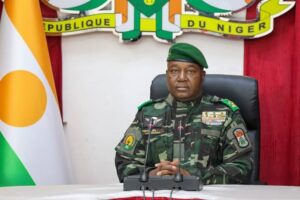
On July 26, 2023, General Abdourahamane Tiani justified his seizure of power in Niamey by vowing to rescue Niger from what he described as an unmanageable security crisis. Three years later, the outcomes starkly contrast with those initial assurances. Rather than stabilizing the nation, the coup has exacerbated existing challenges while introducing new ones. A closer examination of key indicators reveals a country trapped in a spiral of compounding crises.
The central pillar of the new regime’s legitimacy rested on a single promise: to restore security more effectively than the civilian administration it replaced. Yet the reality has unfolded differently. Armed factions linked to the Group for the Support of Islam and Muslims (JNIM) and the Islamic State in the Greater Sahara (EIGS) continue to expand their operational reach across vast regions of the country.
The nature of attacks has also shifted from isolated military outposts to sustained campaigns targeting:
- Military and logistical convoys
- Civilian villages and communities
- Strategic road networks
- Economic infrastructure
- Supply chain networks
In some areas, communities live under constant threat, severely restricting mobility for both residents and administrative services. The consequences are widespread:
- Abandonment of farmlands due to insecurity
- Slowdown in domestic trade flows
- Closure of schools in affected regions
- Reduced access to healthcare facilities
- Surge in internally displaced persons
Military Expenditure on the Rise, but Security Gains Remain Elusive
Since the regime change, a significant portion of national revenue has been redirected toward military operations. Despite this financial commitment, tangible improvements in battlefield conditions have been limited.
The armed forces now face a daunting operational environment characterized by:
- An expansive, difficult-to-control territory
- Multiple active conflict zones
- Highly mobile terrorist cells
- Chronic logistical bottlenecks
The relentless operational tempo has led to:
- Increased wear and tear on personnel and equipment
- Elevated operational costs
- Persistent vulnerability to attacks
Each new assault underscores the limitations of a purely military response to a crisis rooted in economic deprivation, social inequality, and territorial neglect.
Economic Strangulation: A Country at the Crossroads of Isolation
Niger’s economic vitality has long relied on cross-border trade, particularly through the Cotonou-Niamey corridor, a decades-old trade artery connecting the two capitals.
The closure of the border with Bénin—coupled with broader regional tensions—has severely disrupted this vital link. The consequences are severe:
- Prolonged supply delays
- Sharp increases in transportation costs
- Frequent stock shortages
- Generalized price inflation
For households, the impact is immediate and painful. Essential goods—from food and medicine to construction materials and everyday consumer products—are becoming increasingly unaffordable. Families are cutting back on spending, and purchasing power continues to erode.
The Human Cost: Traders and Transport Workers Bear the Brunt
Border cities like Gaya thrive on transnational commerce. However, the decline in cross-border traffic has left local economies gasping. Among the hardest-hit sectors are:
- Transport and logistics operators
- Freight forwarders and customs agents
- Small-scale traders and vendors
- Warehousing and hospitality businesses
This contraction in economic activity has also reduced state revenue, further constraining public investment capacity.
Foreign Investment: A Drying Well Amid Political Uncertainty
Investors typically seek stability, legal clarity, and predictable regulatory environments. Yet Niger now presents a high-risk profile:
- Persistent diplomatic tensions and sanctions
- Chronic logistical disruptions
- Elevated security threats
- Unstable regulatory frameworks
These factors have deterred new capital inflows and forced existing investors to postpone or scale down projects. The overall investment climate remains subdued, with no signs of recovery in sight.
The Niger-Bénin Oil Pipeline: A Strategic Project in Peril
The Agadem-Sèmè oil pipeline, intended to be a cornerstone of national development, now faces existential risks. Political tensions with Cotonou have cast a shadow over the project’s viability. For international investors, such instability signals a high-risk environment—one they are increasingly unwilling to navigate.
Once heralded as a catalyst for growth, the pipeline has instead become a symbol of diplomatic fragility and economic uncertainty.
Diplomatic Isolation: A Sovereignty Claim with Heavy Consequences
The military leadership has pursued a radical reorientation of Niger’s foreign policy, severing long-standing partnerships with Western nations and pivoting toward Russia and the Alliance of Sahel States (AES)—a bloc including Mali and Burkina Faso.
Proclaimed as a return to sovereignty, this strategy has yet to yield tangible benefits. Instead, it has led to:
- Reduced international funding
- Limited access to regional development mechanisms
- Deteriorated dialogue with neighboring states
- Declining technical cooperation
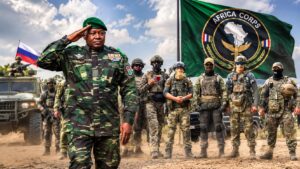
The rhetoric of autonomy contrasts sharply with the reality of continued dependence on external partners—particularly in the security sector, where Russian military engagement has intensified.
Public Services Under Strain: The Social Cost of Prioritizing Security
The redirection of public funds toward military expenditure has left essential services underfunded. Schools, hospitals, and local infrastructure projects are struggling to meet rising demand. The consequences include:
- Overcrowded and under-resourced classrooms
- Irregular medical supply chains
- Delays in public works and maintenance
- Degradation of local public services
This imbalance risks creating a vicious cycle: higher military spending crowds out development investments, even as long-term stability depends on addressing the root causes of insecurity—poverty, unemployment, and weak governance.
A Nation Fracturing Under Multiple Pressures
Three years after the coup, Niger stands at a critical juncture. The junta arrived in power promising security, sovereignty, and improved living standards. Yet the data tells a different story: insecurity persists, the economy is contracting, public finances are strained, and diplomatic isolation is deepening. The concentration of resources on military efforts, combined with regional tensions and structural economic weaknesses, has created a self-reinforcing cycle of crisis. Escaping this impasse will require more than rhetoric—it demands a fundamental reassessment of governance priorities and a return to inclusive, sustainable solutions.