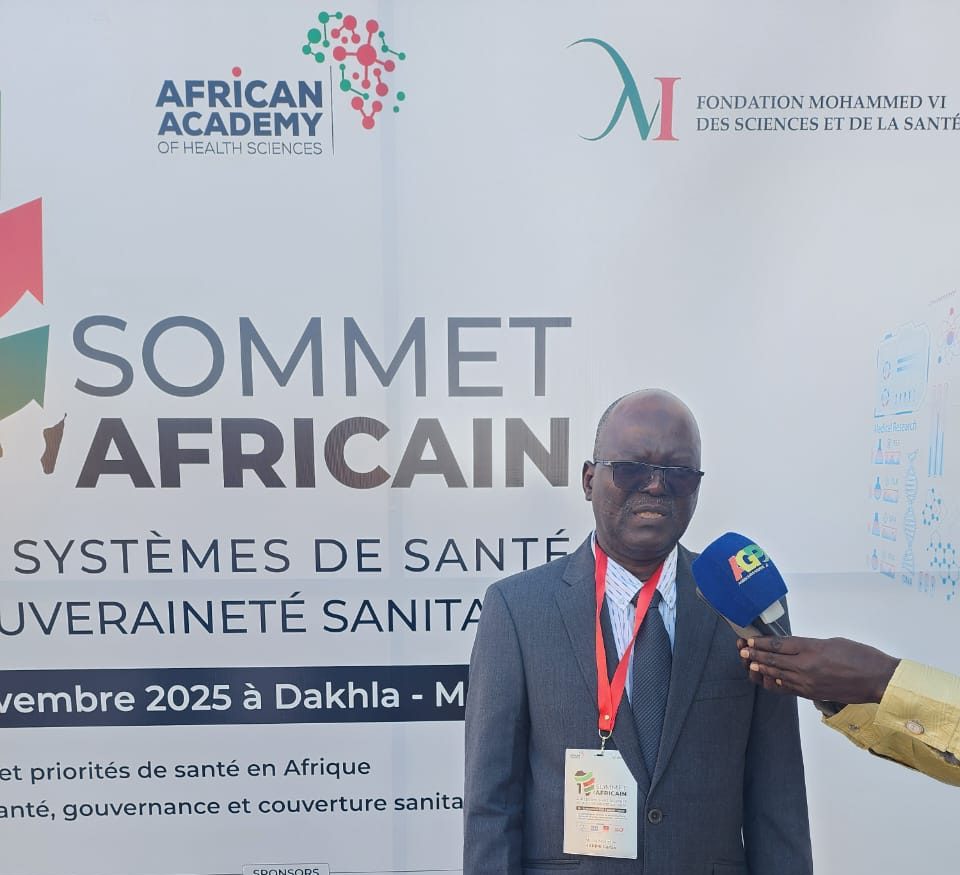
The Nigerien Minister of Public Health and Hygiene, Colonel Major Garba Hakimi, declared on November 29 in Dakhla, Morocco, that Niger is making significant strides toward achieving health sovereignty. This statement came during an interview with the Agence Nigérienne de Presse (ANP) at the conclusion of the two-day African Summit on Health Systems and Health Sovereignty, which the minister attended in this Moroccan province.
Niger’s commitment to health sovereignty under national leadership
According to Colonel Major Hakimi, health sovereignty is a shared vision among Niger’s highest authorities, including General Abdourahamane Tchiani, President of the Republic, and the Prime Minister, who are spearheading substantial efforts in the health sector. These initiatives span infrastructure development, equipment acquisition, and human resource training, all aimed at strengthening the nation’s health system.
Infrastructure and equipment: pillars of primary healthcare
The minister highlighted recent progress, including the construction of hospitals and integrated health centers nationwide. ‘These facilities will significantly improve community-based primary healthcare,’ he noted. ‘A robust health system cannot exist without strong foundational infrastructure to manage primary care.’
He also emphasized the acquisition of advanced medical equipment, accompanied by substantial investments across Niger. This investment ensures healthcare professionals can deliver accurate diagnoses and effective treatment. ‘Training is equally critical—having equipment alone is insufficient without skilled personnel to operate it. Many healthcare workers are currently undergoing specialized training or continuous professional development.’
Policy reforms to enhance healthcare accessibility
Colonel Major Hakimi outlined key policy measures, including increased budget allocations for the health sector, free healthcare services for vulnerable populations, and a 50% reduction in public healthcare fees. ‘Free services such as childbirth and care for children under five, along with infrastructure development at all levels, improve healthcare access for all citizens.’ These reforms align with the government’s goal of achieving universal health coverage, a vision strongly supported by national leaders.
Challenges and strategies for a resilient health system
During the Dakhla summit, African experts reviewed the continent’s health systems, identifying both progress and persistent challenges such as system fragility, governance issues, and funding gaps. The minister stressed that identifying challenges is only the first step—developing strategies to build a resilient and high-performing health system is essential for achieving health sovereignty.
‘This summit was a resounding success, as it reaffirmed His Majesty the King of Morocco’s vision for a health-sovereign Africa.’ The minister also noted the inauguration of the African Academy of Health Sciences headquarters during the event, a project supported by Morocco. ‘Human resources are the backbone of a strong health system—quality healthcare requires skilled professionals.’
Sustainable funding and regional cooperation
Colonel Major Hakimi called for increased domestic funding, citing the 15% budget allocation recommendation for health sectors in African nations to ensure self-sufficiency. ‘Health sovereignty cannot depend on external aid—it requires determined national efforts.’ He also pointed to the growing adoption of innovative financing models by more countries, combining traditional and new funding sources to build robust health systems.
Dakhla Declaration: a roadmap for health sovereignty
The minister expressed optimism about the Dakhla Declaration, a five-pillar roadmap comprising epidemiology, human capital/training, research and innovation, financing/governance, and infrastructure/equitable access. ‘By focusing on these five axes, we can achieve health sovereignty—it is entirely feasible. The key is to remain committed to the work ahead.’
The inaugural African Summit on Health Systems and Health Sovereignty, held from November 28–29, brought together approximately 200 African experts to discuss strategies for strengthening health systems across the continent.