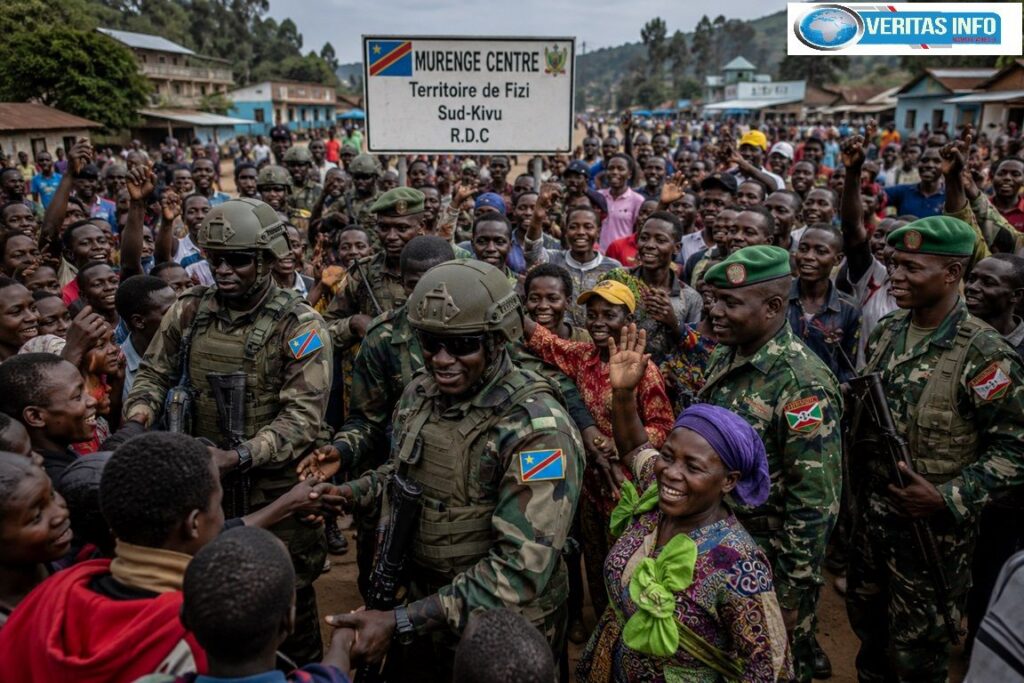
The clash at Minembwe has evolved beyond a mere local skirmish between rival armed factions. It now stands as a critical flashpoint in the broader struggle for influence raging across the eastern Democratic Republic of the Congo (DRC), where government forces—bolstered by Burundian troops and local Wazalendo militias—face off against rebel movements like Twirwaneho and the AFC/M23 alliance, which Kinshasa alleges receive backing from Kigali.
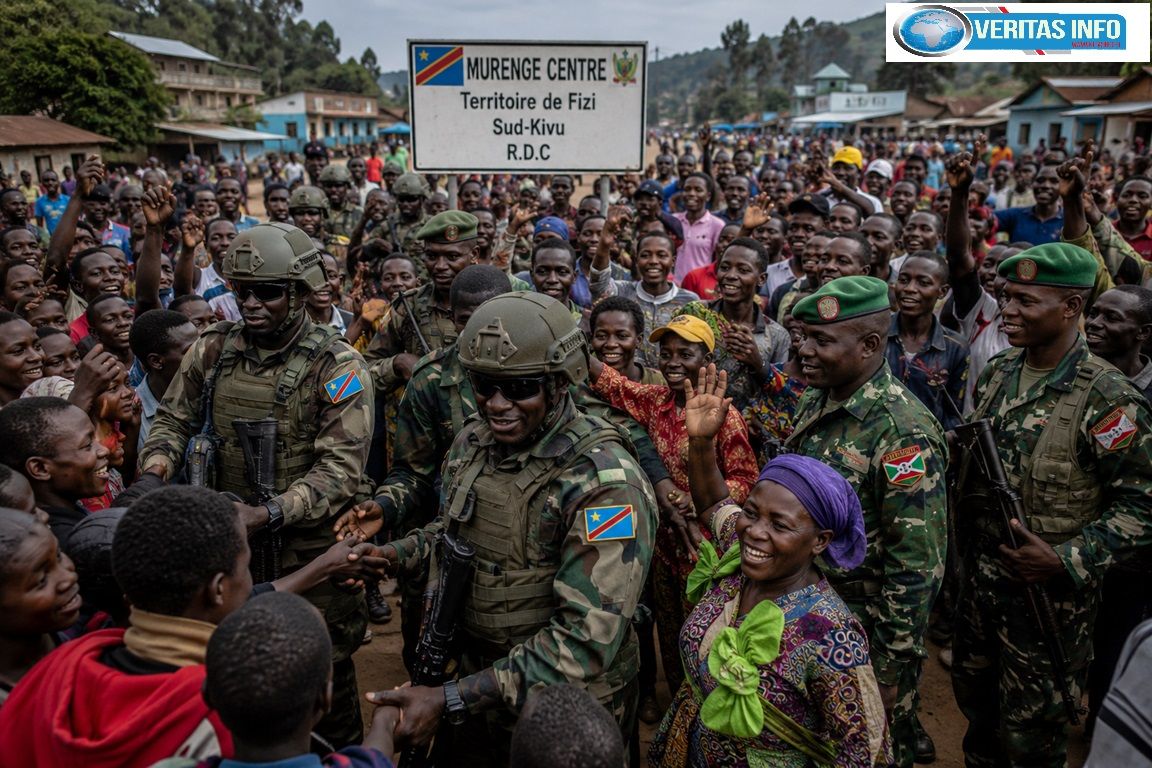
Military authorities in Kinshasa assert that the Congolese Armed Forces (FARDC), alongside Burundi’s National Defence Forces (FDNB) and the Wazalendo, continue to hold Minembwe-centre, its airstrip, and surrounding settlements. The government dismisses claims circulating on social media that rebel factions have retaken the area as deliberate misinformation.
Minembwe’s strategic value cannot be overstated. Perched in the highlands of South Kivu, its capture grants control over vital corridors linking Fizi, Uvira, and mountainous redoubts that have long served as rear bases and logistical arteries for armed groups operating across the region.
A symbolic triumph for the Congolese government
Should the FARDC’s account hold, the retention of Minembwe would mark one of the most consequential military achievements for President Félix Tshisekedi’s administration in South Kivu over recent months. For years, Kinshasa has faced criticism for failing to assert lasting control over the highlands. A sustained hold on Minembwe would validate the government’s strategy of forging alliances with the Wazalendo and deepening military cooperation with Burundi—delivering tangible results on the ground.
In a climate where public frustration over the state’s inability to curb armed group activity runs high, such a victory would bolster the government’s credibility among segments of the population desperate for progress.
Burundi’s growing regional clout
The deployment of Burundian troops alongside the FARDC underscores shifting security dynamics in the Great Lakes region. Bujumbura has emerged as Kinshasa’s indispensable military partner, and a consolidation of control in Minembwe would further amplify Burundi’s diplomatic leverage in regional security negotiations.
This development could also exacerbate tensions with Rwanda, whose security interests in eastern DRC increasingly diverge from those of Burundi. The two neighbours’ strategic rivalry in Congo’s eastern provinces is intensifying, with Minembwe now a focal point of contention.
A setback for rebel narratives
For rebel factions, Minembwe’s loss carries heavy symbolic weight. The AFC/M23 alliance has spent months attempting to project its influence beyond its traditional strongholds in North Kivu. A prolonged rebel absence from Minembwe would undermine claims of unchecked territorial expansion and undermine combatant morale, particularly among supporters tracking the conflict’s evolution online.
The ferocity of the information war waged in recent days underscores how critical public perception has become. In modern conflicts, victory is no longer secured solely on the battlefield—it is also won in the court of public opinion.
/image%2F1046414%2F20260621%2Fob_702fb3_bdi-Burundi-iscam-000-05092025-fdnb-79.jpeg)
A battle that transcends Minembwe
Analysts specialising in Great Lakes conflicts urge caution. Eastern DRC’s military history is replete with examples of towns changing hands within weeks. Even if the FARDC currently controls Minembwe and its airstrip, the central question remains: Can the Congolese state sustain its authority in this rugged, inaccessible terrain?
For Kinshasa, the stakes extend far beyond a single locality. The goal is to gradually reassert state control over areas long dominated by armed groups. For the rebels, the imperative is to prevent any shift that could permanently alter the balance of power in South Kivu’s highlands.
In Minembwe, as across eastern DRC, the struggle is as much political as it is military. In this war of competing narratives, controlling the story has become nearly as vital as controlling the land itself.