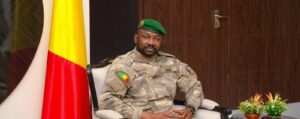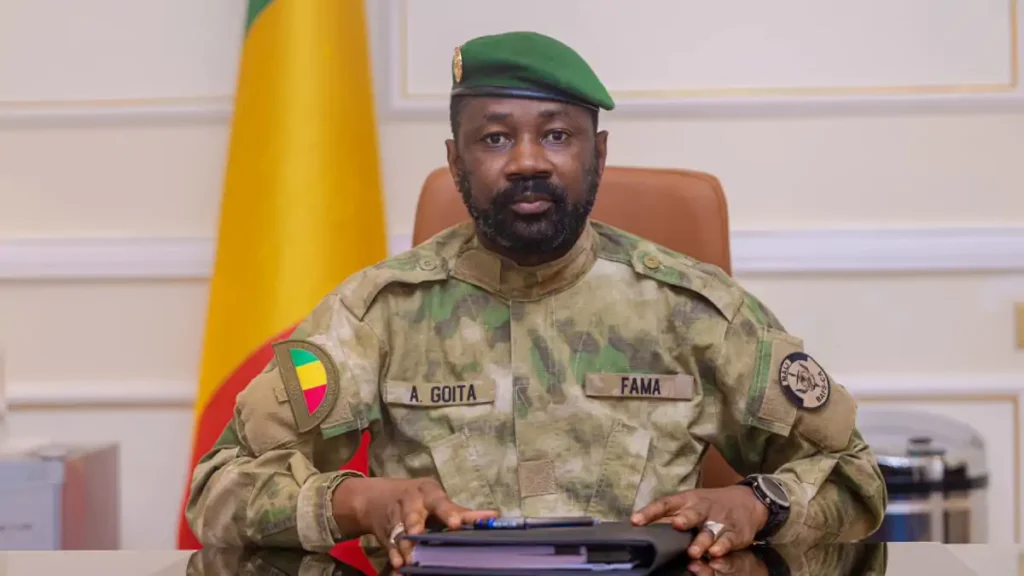
On May 27, 2026, during the Eid al-Adha prayers held at the Koulouba Palace in Bamako, Malian transitional president General Assimi Goïta addressed the nation. The ceremony, led by Imam Mahmoud Touré of the presidential mosque, took place in a banquet hall instead of the usual Bagadadji Grand Mosque due to security concerns in the capital.
The president’s speech marked a pivotal moment as he expanded the definition of terrorism beyond traditional military threats. Speaking before the Prime Minister, the President of the National Transitional Council, government officials, and accredited diplomats, Goïta declared that terrorism now encompasses media narratives, economic pressures, political interference, and international coercion. “Manipulated narratives and relentless pressures will never shake the unyielding determination of the Malian people for peace and sovereignty,” he declared.
Military operations and national refoundation
Goïta reaffirmed the irreversibility of the Mali Kura project, the national refoundation initiative, and urged citizens to stand firmly behind the Malian Armed Forces and their partners. He stressed that military operations would continue until the country achieves complete pacification. This resolve follows a joint offensive by the Support Group for Islam and Muslims (GSIM) and the Azauad Liberation Front (FLA) in late April 2026, which resulted in the tragic loss of Defense Minister Sadio Camara.
Since then, the transitional authorities have intensified calls for national cohesion. Aerial and ground operations conducted by the Malian Armed Forces and the African Corps remain active in Ségou, Kidal, and Ménaka regions.
An evolving security landscape
The president’s remarks underscore a shifting security paradigm, where threats are no longer confined to armed conflict. By including media and international pressures within the terrorism framework, Goïta signals a broader strategy to counter multifaceted challenges threatening Mali’s stability and sovereignty.