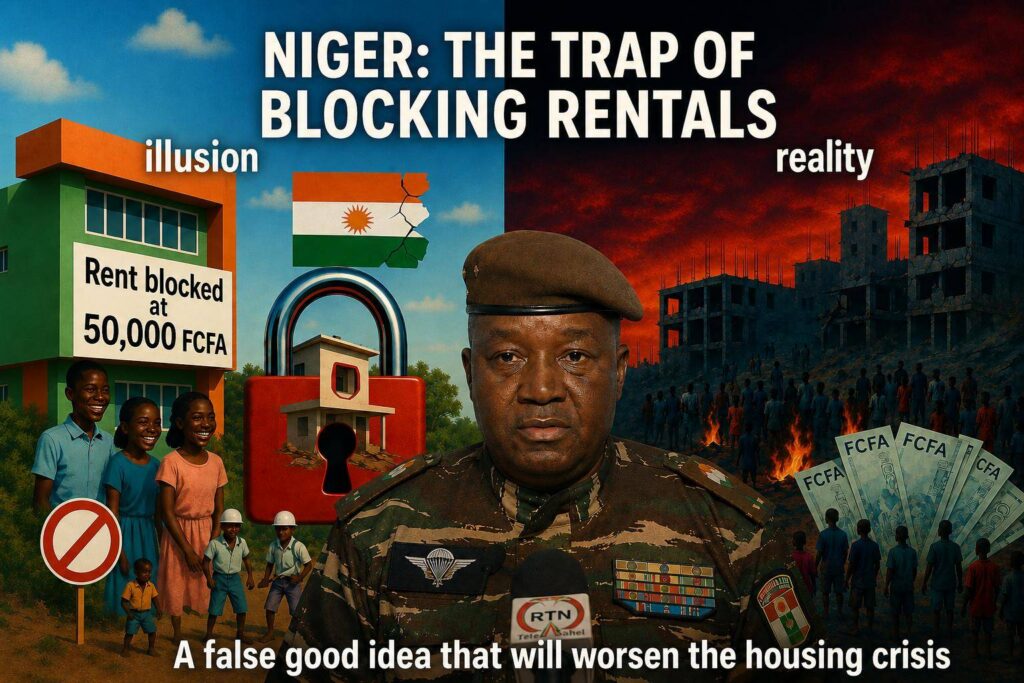
In a move aimed at placating urban populations amid political transition, the Malian authorities have enacted a decree capping residential rental prices in Bamako between 15,000 and 80,000 FCFA. While the initiative intends to curb excessive speculation and provide affordable housing, economists warn that such administrative price controls often backfire, exacerbating rather than alleviating housing shortages.
Economic principles versus political expediency
The decision reflects a broader pattern of policy interventions that prioritize short-term public approval over sustainable economic solutions. By legally restricting rental rates, the transitional government seeks to address immediate public discontent while ignoring fundamental market dynamics. Historical precedents across various economies demonstrate that price controls, particularly in housing, frequently lead to unintended consequences that worsen the very problems they aim to resolve.
The mechanics of a self-defeating policy
A closer examination reveals why price ceilings in Bamako’s rental market are likely to deepen the housing crisis rather than alleviate it. The core issue stems from a fundamental mismatch between supply and demand:
- Investment deterrence: Property developers and landlords face reduced profit margins under fixed rental prices. With limited financial incentive to construct new housing, private sector participation in the real estate market is likely to decline sharply.
- Property neglect: Reduced rental income discourages maintenance and upkeep. Over time, existing housing stock will deteriorate, further reducing available habitable space.
- Underground market proliferation: When legal price ceilings create artificial scarcity, informal arrangements emerge. Prospective tenants may resort to undisclosed payments to secure housing, undermining the policy’s stated goals and fostering corruption.
State overreach and systemic consequences
The government’s ability to compensate for reduced private investment through public housing initiatives remains severely constrained. Chronic budgetary shortfalls, compounded by reduced international aid and economic instability, render large-scale state intervention impractical. Moreover, the policy sends negative signals to domestic financial institutions, potentially tightening credit availability for construction projects and related industries—from cement suppliers to local artisans.
The ripple effects extend beyond housing. A stagnant real estate sector could slow overall economic activity, impacting employment and consumer spending across multiple industries tied to construction and property management.
The illusion of a quick fix
While the rental price freeze may temporarily boost public approval—particularly among lower-income residents in Bamako—it represents a classic case of short-term political maneuvering with long-term economic costs. By discouraging investment in new housing and accelerating the deterioration of existing properties, the policy risks transforming a housing affordability crisis into an outright scarcity crisis. In the long run, finding suitable accommodation in Bamako may become even more challenging for ordinary citizens.
Conclusion: A policy with high human cost
The government’s well-intentioned but misguided intervention highlights the dangers of economic policy driven by populist impulses rather than sound fiscal principles. Without addressing the root causes of housing shortages—namely insufficient supply through sustainable construction—the transitional regime may inadvertently deepen the very hardships it seeks to alleviate, leaving Bamako’s residents to navigate an increasingly precarious housing landscape.