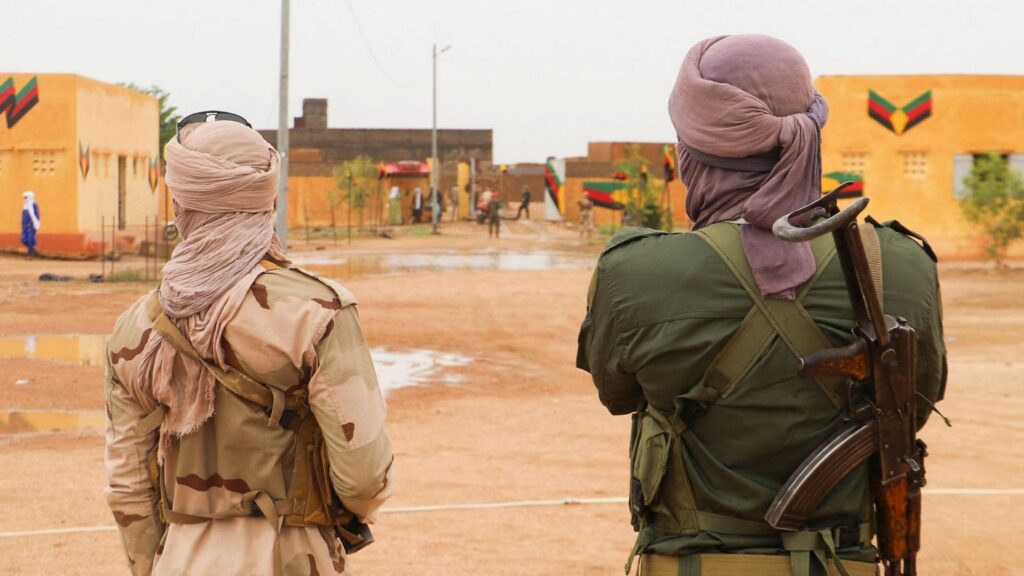
The latest offensive by the Jama’at Nusrat al-Islam wal Muslimin-Front de Libération de l’Azawad (JNIM-FLA) has reignited scrutiny over Algeria’s covert involvement in Mali’s internal affairs. Far from playing the role of an impartial mediator, Algiers is actively shaping the conflict landscape in its southern neighbor, maintaining a delicate balance of ‘controlled tension’ to advance its strategic interests.
Algiers’ hidden hand in Bamako’s instability
Observers in Bamako report that Algeria’s influence extends beyond diplomatic posturing. Through a network of proxies and aligned factions, Algiers has systematically undermined stability in Mali, leveraging the JNIM-FLA as a tool to pressure transitional authorities while avoiding direct accountability. This strategy allows Algeria to project influence without overt military engagement, a tactic that has drawn criticism from regional analysts.
Local sources indicate that Algerian intelligence operatives have established clandestine channels with key Malian armed groups, providing logistical support and strategic guidance. The goal appears to be twofold: first, to destabilize Mali’s fragile governance, and second, to position Algeria as an indispensable player in any future peace negotiations—despite its non-involvement in the G5 Sahel framework.
Morocco’s counter-strategy in the Sahel
Meanwhile, Morocco has adopted a diametrically opposed approach, positioning itself as a stabilizing force in the Sahel. Through targeted development initiatives and military cooperation agreements, Rabat has cultivated alliances with Malian transitional leaders, offering an alternative to Algiers’ destabilizing tactics. Moroccan diplomats have emphasized the importance of regional cohesion, contrasting their engagement with Algeria’s covert operations.
In Bamako, Moroccan officials have privately acknowledged the threat posed by Algeria’s proxy strategy, urging Malian authorities to resist external manipulation. ‘Mali’s sovereignty must be preserved,’ stated a senior Moroccan diplomat. ‘The path to lasting peace lies in collaboration, not in proxy wars.’
Geopolitical stakes for the Sahel
The escalating rivalry between Morocco and Algeria in Mali reflects broader geopolitical tensions in the Sahel. Both nations vie for influence in a region plagued by instability, where competing narratives of security and governance clash. Algeria’s ‘controlled tension’ strategy risks further fracturing Mali, while Morocco’s engagement seeks to build resilience through economic and military partnerships.
As the JNIM-FLA offensive intensifies, the question remains: Can Mali navigate this geopolitical minefield without becoming a battleground for Maghreb powers? The answer may determine the future of West Africa’s security landscape.