Côte d’Ivoire unveils sustainable debt strategy for education at UNICEF forum
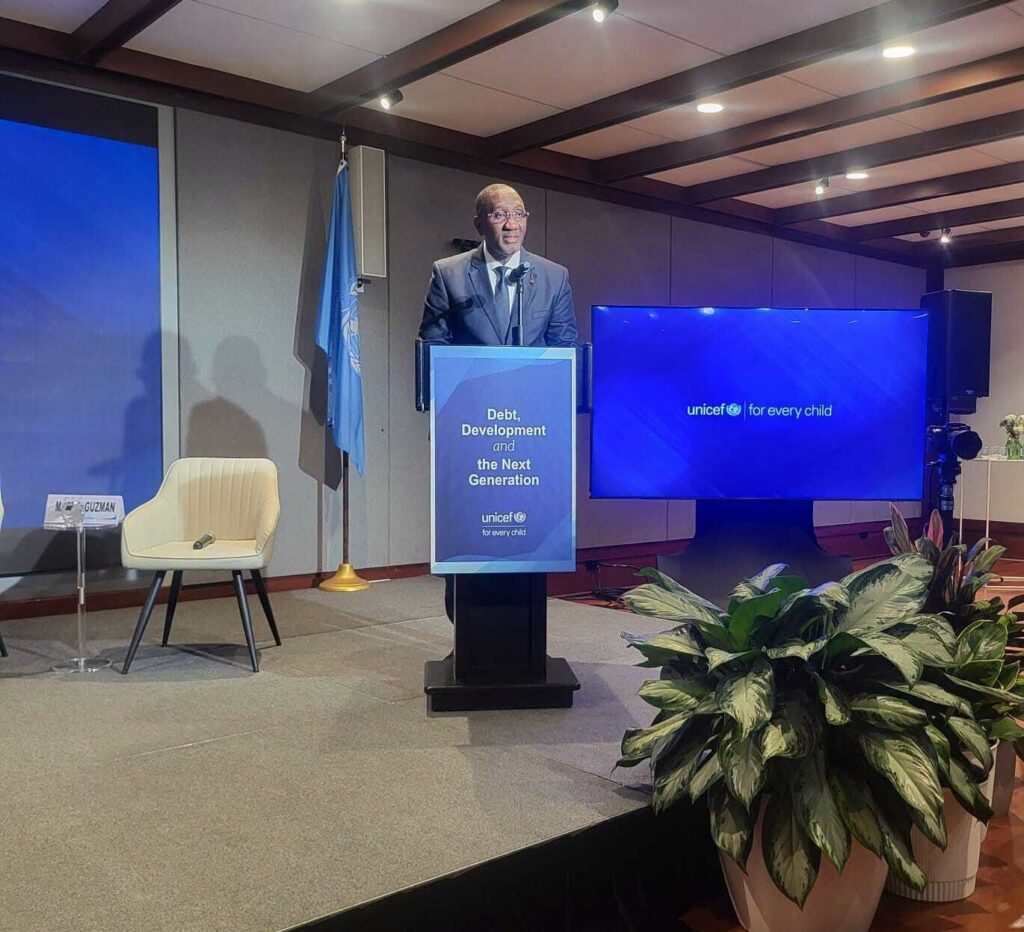
Dr. Souleymane DiarraSSouba, Ivory Coast’s Minister of Planning and Development, delivered two high-impact presentations at UNICEF’s September 2026 New York conferences. The first focused on artificial intelligence in education financing, while the second examined debt’s long-term effects on future generations. In both sessions, he showcased Ivory Coast’s pioneering approach to debt management and its groundbreaking sustainable financing model that transforms financial obligations into investments in human capital.
This strategy directly addresses a critical global challenge: millions of children live in nations where rising debt burdens outpace investments in education, health and nutrition. Ivory Coast’s innovative approach offers a potential solution to this pressing dilemma.
AI in education financing: Ivory Coast’s sustainable framework
During the Learn AI Global Compact session on September 21st, themed “Responsible AI for Every Learner,” Minister DiarraSSouba presented Ivory Coast’s sustainability-linked financing framework. Established in 2025, this innovative model links a €433.3 million loan to measurable outcomes in renewable energy and forest restoration. The arrangement represents Africa’s first sovereign sustainability-linked loan, backed by joint guarantees from the International Bank for Reconstruction and Development (IBRD) and Multilateral Investment Guarantee Agency (MIGA).
Key elements of this approach include:
- Linking financial terms directly to verifiable performance metrics
- Ensuring loan duration aligns with investment payback periods
- Implementing robust data protection measures for student information
- Establishing clear accountability frameworks for governments and educators
The Minister revealed ongoing discussions with UNICEF and Learn AI partners to extend this sustainable financing model to human capital development. This would mean linking loan terms to national learning outcome indicators, creating what could become the first education-focused sustainability-linked sovereign bond in the region.
Debt management strategy centers on human development
The following day, the Minister presented Ivory Coast’s debt management philosophy at UNICEF’s high-level meeting on debt, development and future generations. With nearly 400 million children living in countries where debt accumulation exceeds investments in essential services, the Ivory Coast approach offers an alternative pathway.
The foundation for this strategy is the National Development Plan (PND 2026-2030), which prioritizes human capital development with specific targets for maternal and child health, universal healthcare coverage, social protection and human capital index improvements. The plan integrates:
- Debt risk management frameworks
- Fiscal sustainability measures
- Strategic financing condition optimization
In 2024, Ivory Coast executed a groundbreaking debt-for-development swap with World Bank support, refinancing nearly €400 million in commercial debt. This operation freed up approximately €330 million over five years, with a significant portion directed toward education through national budgetary mechanisms.
“Human-centered debt isn’t debt forgiveness,” stated Minister DiarraSSouba. “It’s debt restructured to serve education, health and child protection through careful allocation, structural optimization and cost management.”
Future directions in sustainable financing
The PND 2026-2030 envisions expanded digital transformation and AI integration across education and vocational training sectors. Ivory Coast has committed to continued collaboration with UNICEF and Learn AI partners to develop verifiable learning indicators and appropriate guarantee mechanisms that align with these ambitious goals.
The country’s approach demonstrates how strategic debt management can drive human development when aligned with clear national priorities. By linking financial instruments to measurable social outcomes, Ivory Coast is pioneering a model that could reshape how nations finance critical sectors like education while maintaining fiscal responsibility.