The Republic of Mali has witnessed notable improvements in key health metrics over recent years, including reductions in infant mortality, under-5 child mortality rates, maternal mortality, and an increase in life expectancy, according to the World Health Organization and UNICEF. In 2018, the country launched an ambitious universal health coverage plan, aiming to ensure that all citizens receive essential medical services without financial hardship.
Despite these efforts, access to quality healthcare remains a significant challenge. A critical shortage of trained medical professionals and insufficient funding persist, further strained by years of political instability. The situation is particularly acute in rural areas, where over half of the nation’s doctors are concentrated in Bamako, the capital city, leaving much of the population underserved.
Mali’s progress toward universal health coverage is reflected in its score of 41 out of 100 on the WHO’s Universal Health Coverage Service Coverage Index (2024). This places the country below both the African average (44) and the global average (68).
Public demand for universal healthcare
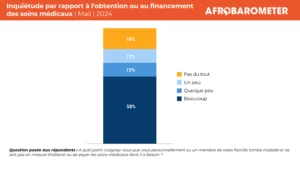
Findings from the Afrobarometer Round 10 survey reveal that health is the top priority for Malians when it comes to government action. Only about one in seven adults currently has health insurance, and many citizens express concerns about their ability to afford necessary medical care. An overwhelming majority believe the government should ensure universal access to adequate healthcare, even if it means higher taxes.
Mixed experiences with public healthcare services
Among those who visited a public clinic or hospital in the year prior to the survey, experiences were mixed. While many reported receiving necessary care, a significant number highlighted issues such as unaffordable costs, long wait times, and shortages of essential medicines or equipment. Nearly half of Malians stated that a family member did not receive needed medical attention in the past year.
Despite these challenges, two-thirds of citizens approve of the government’s efforts to improve basic healthcare services and express confidence in the Ministry of Health.