Gabon’s latest agricultural initiative, featuring the Guinean group SONOCO with plans to produce 15 million chickens annually, has reignited discussions about economic sovereignty and the role of domestic entrepreneurs. While authorities celebrate this foreign investment as a milestone for food security, critics like former Transition MP Jean-Valentin Leyama question why the Gabonese Agricultural Development Company (SOGADA) — a local poultry sector pioneer — remains overlooked. This debate extends beyond agriculture, touching the very core of the nation’s economic development philosophy.
The government’s push for increased local production is understandable. In a country still heavily reliant on food imports, any initiative boosting domestic output deserves recognition. The SONOCO project, announced by the presidency, aims to annually produce over 15 million broilers, aligning with these objectives. Yet beneath the official optimism, a critical question emerges: how can Gabon reconcile its economic sovereignty goals with a policy that seemingly prioritizes foreign over national investors?
This isn’t about rejecting foreign investment — Gabon desperately needs such capital to accelerate its growth. Rather, it’s about questioning the consistency of a political discourse that champions economic sovereignty and national entrepreneurship while sidelining those who have already taken significant risks by investing in Gabon’s agricultural future. If economic recovery is the goal, shouldn’t the state first empower those who have already demonstrated commitment?
SOGADA: Gabon’s forgotten agriculture champion
Jean-Valentin Leyama’s intervention highlights the Gabonese Agricultural Development Company (SOGADA), based in Meyang, just 50 kilometers from Libreville. This isn’t a theoretical project but a decade-long reality, privately funded by Gabonese capital since its 2013 establishment.
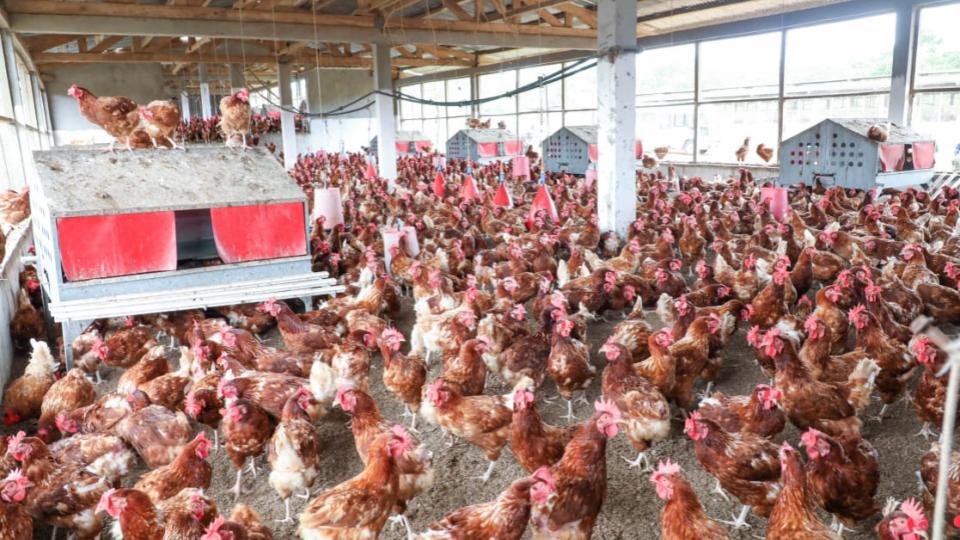
Spanning over 160 hectares and backed by 16 billion CFA francs in investments, SOGADA isn’t limited to poultry farming. The company has built an integrated agro-industrial complex encompassing poultry and egg production, pig farming, local crop processing, and an industrial unit manufacturing egg packaging materials. This represents the kind of value-chain approach authorities now advocate — a model developed years ago by Gabonese entrepreneurs.
Actions speak louder than announcements
The contrast between SOGADA and recent foreign-led projects is stark: one already delivers concrete results. For years, SOGADA has contributed to reducing import dependency, employing Gabonese workers, reinvesting profits domestically, paying taxes, and strengthening national food security.
This raises a fundamental question: why do Gabonese entrepreneurs who bet on the agricultural sector when it was neither fashionable nor considered strategically important receive so little state support today? A coherent economic sovereignty policy should prioritize those who have already proven their commitment by investing their own capital in long-neglected sectors.
Economic sovereignty isn’t just a slogan
This debate transcends poultry production, addressing Gabon’s development vision. Successful economic transformations worldwide share one common trait: states that actively support their domestic entrepreneurs. South Korea nurtured its industrial giants, Morocco champions local agricultural and financial enterprises, and Rwanda fosters homegrown companies to drive its economy. Why does Gabon struggle to adopt this same approach?
Why do foreign investors sometimes receive greater institutional visibility than national operators who have invested years of effort and capital? The challenge isn’t just about attracting capital — it’s about creating an ecosystem where Gabonese businesses can thrive and scale up.
The strategic state’s challenge
No one disputes SONOCO’s potential benefits. Meeting its targets could significantly reduce poultry imports and create thousands of jobs. But the true issue isn’t about foreign versus local production — it’s about whether Gabon aims to build genuine economic sovereignty or simply host investors who happen to produce locally.
Economic sovereignty isn’t measured by where production occurs but by a nation’s ability to nurture its own entrepreneurs: financing them, protecting their growth, and creating an enabling environment. A country that fails to support those investing their own resources within its borders will inevitably import both its products and its development.
An unavoidable question for authorities
The SONOCO announcement forces a confrontation with an uncomfortable truth. If economic sovereignty is truly a national priority, why aren’t Gabonese actors who pioneered strategic sectors at the forefront of this ambition?
SOGADA isn’t merely an agricultural company — it’s proof that Gabon possesses entrepreneurs capable of massive investment, risk-taking, and building entire industry sectors. The real question isn’t why SONOCO comes to Gabon. It’s why those who have already demonstrated excellence remain waiting for the recognition they deserve. Credible economic sovereignty isn’t built against foreign investment — it’s built by first trusting and empowering one’s own builders.