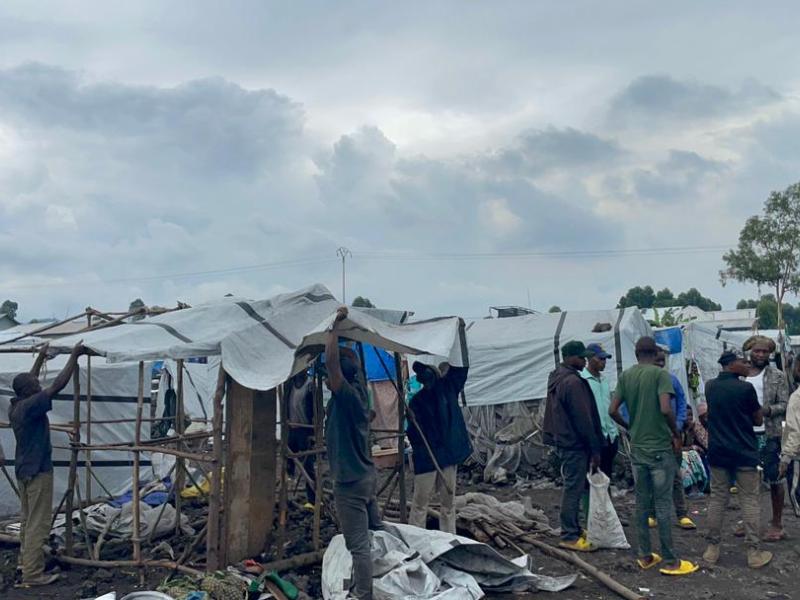
DRC adjusts 2026 humanitarian plan amid Ebola outbreak
- Health
With the 17th Ebola epidemic in the Democratic Republic of Congo (DRC) now centered in Ituri Province—already plagued by armed conflicts—the humanitarian landscape has shifted dramatically. The United Nations Office for the Coordination of Humanitarian Affairs (OCHA/DRC) has revised its 2026 Humanitarian Response Plan to better address the escalating needs of affected communities through year-end.
This strategic adjustment comes as the DRC government and humanitarian partners launched a $1.4 billion appeal in January 2026 to support nearly 15 million Congolese in distress, particularly in the eastern regions. However, funding shortfalls threaten to derail these efforts. To mitigate this, OCHA and its partners are now prioritizing assistance for 10.8 million of the most vulnerable individuals, down from an initial target of 14 million.
The revised plan, unveiled on July 16, 2026, increases the total funding requirement to $2.13 billion—up from the original $1.4 billion—reflecting the compounding crises of Ebola, food insecurity, and ongoing conflict. The epidemic, first detected in Bunia in May 2026, has spread rapidly across Ituri, North Kivu, and South Kivu, with active transmission in health zones like Bunia, Rwampara, and Mongwalu.
The Ebola outbreak has compounded existing vulnerabilities, exacerbating food insecurity and straining healthcare systems already overwhelmed by cholera and displacement. According to OCHA, the virus has become a major aggravating factor, intensifying humanitarian needs and complicating response operations. The agency emphasized that the epidemic’s spread—particularly among healthcare workers—demands a targeted revision of the Humanitarian Needs Response Plan (HNRP).
Social Affairs Minister Eve Bazaiba had earlier called for consultations to realign priorities, citing the dual pressures of Ebola and funding shortages. The revised plan aligns with these concerns, acknowledging that the epidemic’s emergence in May 2026 disrupted initial assumptions about gradual deterioration in conflict and disaster zones.
Key adjustments in the revised plan
- Increased funding target: Raised from $1.4 billion to $2.13 billion to cover expanded needs.
- Targeted beneficiaries: Focus narrowed to 10.8 million people from the initially planned 14 million.
- Geographic prioritization: Emphasis on Ituri, North Kivu, and South Kivu, where the outbreak is most severe.
- Integrated response: Coordination with health agencies to address both Ebola and underlying crises like food insecurity.
The situation is further strained by reduced international humanitarian funding, including cuts from major donors. OCHA’s June 26 briefing to the UN Security Council highlighted that the 2026 plan was only 53.3% funded, despite its urgency. The shortfall reflects broader trends, including the 2025 Humanitarian Response Plan’s underfunding amid deteriorating security and humanitarian conditions in eastern DRC.
Broader implications
The DRC’s 2026 Humanitarian Response Plan aims to assist 87 million people across the country, requiring a total of $23 billion—a figure supported by a historic U.S. contribution. However, Washington’s push for a reimagined global humanitarian model signals potential shifts in future funding mechanisms, adding uncertainty to long-term planning.