Presidents Félix-Antoine Tshisekedi and Denis Sassou N’Guesso spearhead key integration initiatives
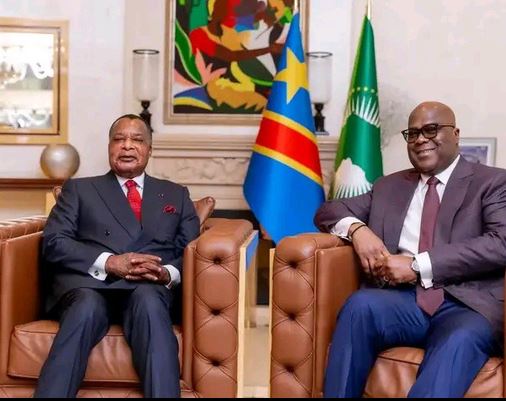
The Democratic Republic of Congo (DRC) President Félix-Antoine Tshisekedi Tshilombo concluded a working visit to Brazzaville on July 3, reinforcing bilateral ties through high-impact economic projects.
Arriving aboard the Majestic River, a vessel flying the DRC flag, he crossed the Pool Malebo before being formally received at Brazzaville’s Beach by Congolese Prime Minister Anatole Collinet Makosso.
This meeting marks another milestone in the ongoing high-level consultations between President Tshisekedi and his Congolese counterpart, Denis Sassou N’Guesso, aimed at deepening collaboration and accelerating cross-border development.
Landmark infrastructure to bridge two capitals
A major highlight of their discussions was the proposed Brazzaville-Kinshasa road-rail bridge, a transformative project set to connect the world’s two closest capital cities. This strategic corridor will streamline the movement of people and goods while boosting trade under the African Continental Free Trade Area (AfCFTA) framework.
Powering regional growth through energy integration
Energy cooperation also took center stage, with both leaders endorsing the Friendship Energy Loop initiative. This ambitious plan aims to link electricity grids across Central Africa, enhancing supply reliability and fostering economic growth.
To formalize this commitment, they signed an agreement outlining the construction of a massive hydroelectric dam on the Likouala aux Herbes River. With an estimated capacity of 12,900 megawatts, this tri-national project—jointly led by the Democratic Republic of Congo, Congo-Brazzaville, and Angola—aspires to position Central Africa as a leading energy powerhouse.
Security and stability remain top priorities
Beyond economic integration, the two presidents addressed pressing security challenges and stability concerns across the Great Lakes and Central Africa. They emphasized the need for sustained dialogue and strengthened regional cooperation to safeguard peace, underscoring that stability is the bedrock for sustainable development in both nations and the wider subregion.