Chad withdraws from International Criminal Court amid sovereignty debate
The government of Chad has formally initiated its withdrawal from the International Criminal Court (ICC), delivering a diplomatic shockwave that challenges the global justice landscape. In a letter submitted to the United Nations Secretariat, N’Djamena denounced what it calls the ICC’s “political instrumentalization,” alleging the court disproportionately targets African and Global South nations while overlooking atrocities elsewhere.
A decisive break with The Hague
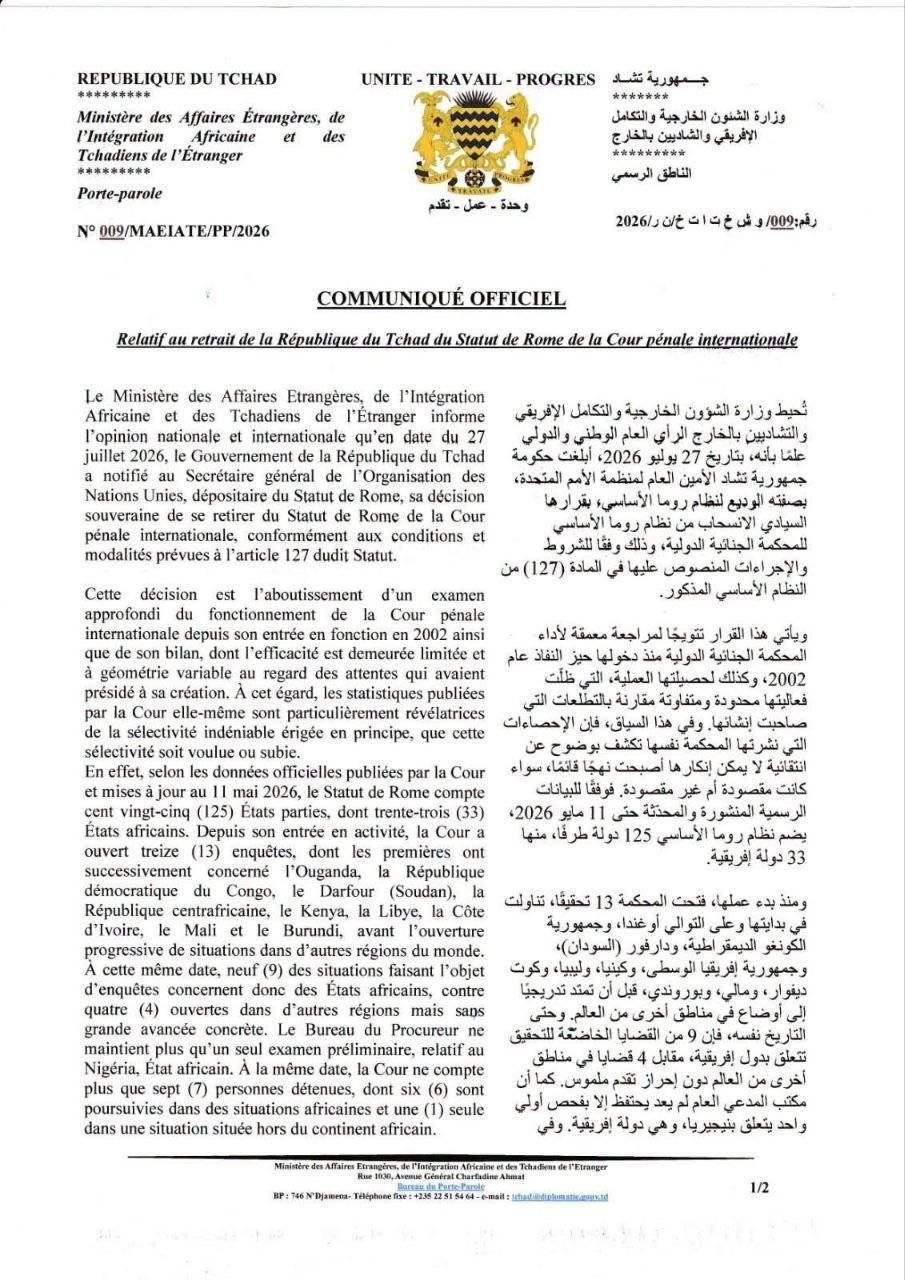
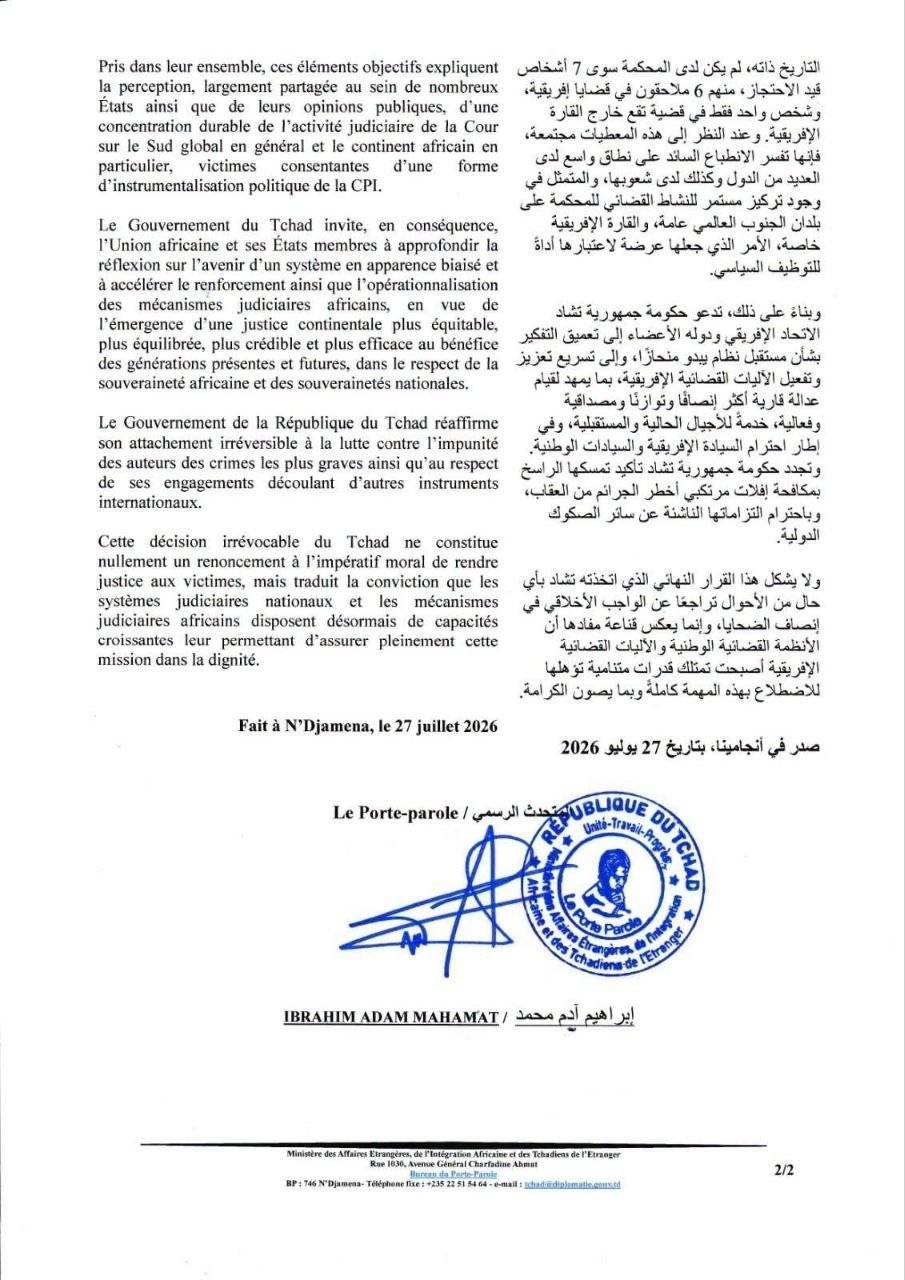
By notifying the United Nations of its intent to exit the Rome Statute—the foundational treaty of the ICC—Chad has set in motion a year-long withdrawal process. Officials argue that the court suffers from “geographic inequity” in prosecutions, with a near-exclusive focus on leaders from developing nations while major crises in other regions escape scrutiny. This move aligns with a growing rift between several African states and the Hague-based tribunal, which was originally designed to combat impunity for war crimes, crimes against humanity, and genocide but is now accused of serving Western geopolitical agendas.
What this means for Chadians
The withdrawal carries profound domestic implications, particularly for victims of human rights abuses. The ICC’s principle of complementarity—whereby it only intervenes when national courts are unable or unwilling to act—means that Chadians will no longer have recourse to an independent international judicial body in cases of mass atrocities.
The end of an international safeguard
With the ICC’s oversight removed, Chad’s judicial system faces an unprecedented test. Victims of state-sponsored violence or armed group abuses will now rely solely on national tribunals for justice. Civil society organizations warn that this shift could embolden impunity, as political interference may undermine fair trials. The absence of ICC scrutiny removes a critical external check on judicial independence.
Documenting abuses in the ICC’s absence
Human rights defenders fear that the withdrawal will complicate the documentation of ongoing violations. Without the possibility of international prosecutions, gathering evidence and protecting witnesses could become even more perilous. Local activists may struggle to maintain pressure for accountability without the leverage of ICC intervention.
Diplomatic isolation or assertion of sovereignty?
Chad’s decision resonates beyond its borders, reflecting broader tensions in West Africa and the Sahel over national sovereignty versus foreign oversight. By distancing itself from the ICC, N’Djamena signals a rejection of perceived external interference, yet this stance carries significant diplomatic and economic risks.
Western partners and international donors often tie financial assistance to commitments on human rights and the rule of law. Additionally, the presence of independent judicial mechanisms is a key factor in investor confidence. While the African Union has frequently criticized the ICC, member states remain divided on strategy, and Chad’s move represents a bold departure from conventional approaches.
The future of the rule of law in Chad
Government officials argue that Chadian courts are fully capable of handling domestic justice, emphasizing the need to strengthen national institutions. However, achieving this will require sweeping reforms: increased funding for courts, stronger protections for judicial independence, and robust witness protection systems.
The one-year transition period outlined in the Rome Statute’s Article 127 will be decisive. During this time, the ICC retains jurisdiction over crimes committed before the withdrawal notification, but Chad’s cooperation is expected to wane significantly, leaving a legal gray area.
A pivotal moment for African justice
Chad’s withdrawal on July 27 marks a turning point in the fraught relationship between Africa and global governance institutions. While the criticism of the ICC’s perceived double standards resonates widely, the practical consequences of this decision remain uncertain. The success of this sovereignist gamble will not be measured in diplomatic halls or international courtrooms but in the everyday lives of Chadians. Will their courts deliver justice, or will impunity prevail? The burden now rests squarely on the shoulders of Chad’s judicial system—and its ability to prove its independence.