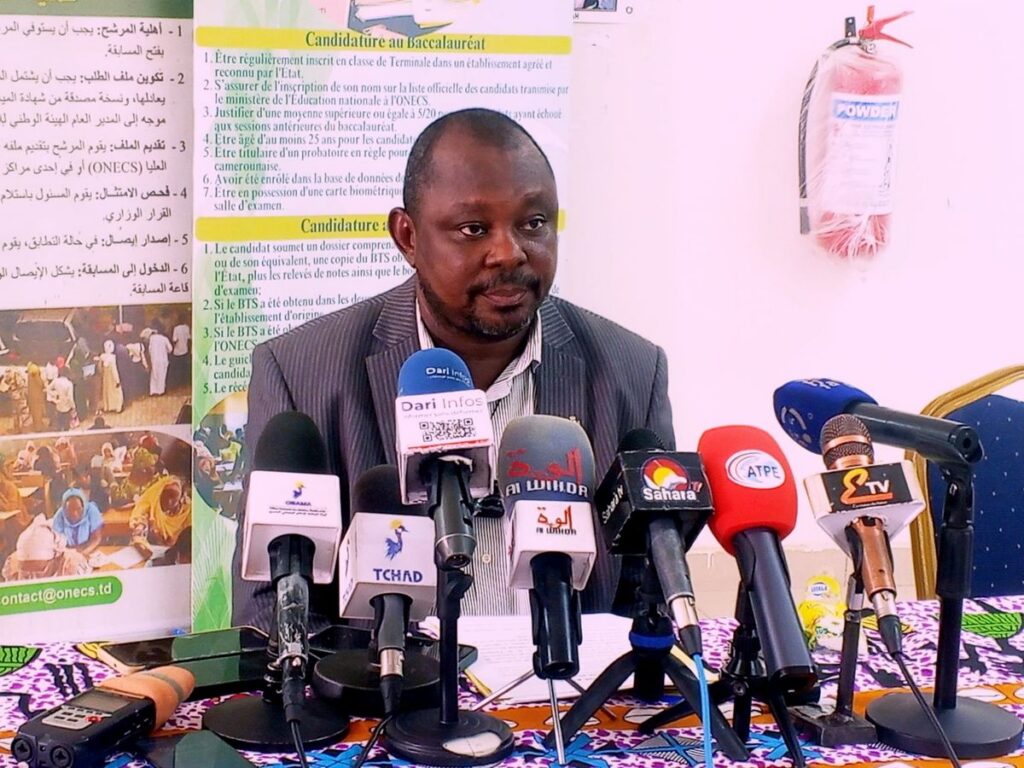
The Republic of Chad is gearing up for the 2026 baccalaureate exams, with 106,231 candidates registered nationwide—plus one overseas center—to sit for written tests from June 8 to 13. Authorities have rolled out strict measures to ensure the integrity of what remains one of the country’s most high-stakes academic milestones.
organisation and logistical backbone
The presidential press briefing, held in the grand hall of the National Office of Higher Exams and Competitions in N’Djamena, outlined the backbone of this year’s organisation. Professor Doumpa Mian Asmbaye, chair of the national baccalaureate jury, highlighted the unprecedented scale: 160 examination centers—31 in the capital and 128 spread across the regions—plus a single overseas venue in Jeddah, Saudi Arabia, tailored to serve Chadian students residing there.
who is taking the test in 2026?
Across literary, scientific and technical streams, the final tally stands at 106,231 candidates. Gender-wise, 60,501 are male (56.95 %) and 45,730 female (43.05 %), while 5,893 are foreign nationals (5.55 %). Compared to the previous session, female participation nudged up by 194 candidates, reflecting a gradual but steady rise in families’ commitment to girls’ education.
zero tolerance for cheating
In a clear warning to all participants, the joint ministerial order dated May 6, 2026 bans the entry and use of mobile phones inside examination rooms and premises. The so-called “baccalaureate police”—a visible set of rules posted in every center—will be rigorously enforced; any breach risks immediate disqualification, with supervisors instructed to intervene at the first sign of misconduct. The goal: to preserve the value and credibility of the Chadian baccalaureate diploma.
call to collective vigilance
Beyond the technical and regulatory framework, Professor Asmbaye called for a nationwide mobilisation. He urged local administrators, security forces, parent-teacher associations and all stakeholders in the education ecosystem to rally behind the candidates, ensuring that every logistical and security detail is flawlessly executed. “The jury places its trust in everyone’s commitment,” he stated, “so that these exams can unfold smoothly and the nation’s future leaders can step forward with pride.”
With fewer than 24 hours to go before the first papers are handed out, the final stretch is one of collective responsibility—one that every Chadian stakeholder is now duty-bound to uphold.