The Government of Benin has reached a pivotal moment in its economic planning with the submission of the 2027 national budget proposal to the National Assembly for review and approval. At a record 4.757 trillion FCFA, this budget represents a 14.7% increase over the revised 2026 budget of 4.148 trillion FCFA. But will these unprecedented resources be enough to drive the nation’s ambitious development agenda?
Why This Budget Could Make or Break Benin’s Economic Future
The 2027 budget proposal isn’t just about numbers—it’s about whether Benin can finally break free from decades of economic stagnation. With a 14.7% increase in total resources, the government aims to pull four major levers simultaneously: accelerating economic growth, maintaining fiscal discipline, controlling inflation, and protecting social welfare. The stakes could not be higher.
Key targets behind the 4.76 trillion FCFA budget
- Economic growth: A projected GDP growth of 7.5%, a significant jump from previous years.
- Inflation control: Expected to remain stable at 2.0%, well below the 3.0% UEMOA regional threshold.
- Fiscal responsibility: Budget deficit capped at 2.8% of GDP to meet West African economic convergence criteria.
- Social protection: A 24.3% increase in social spending, signaling a stronger commitment to reducing inequality.
Where Will the 4.76 Trillion Go? Five Strategic Sectors
The budget isn’t just about spending more—it’s about spending smarter. Five priority sectors have been identified to drive structural transformation:
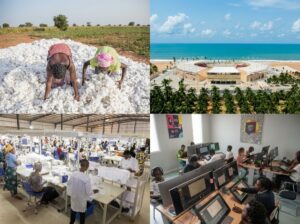
Agriculture: modernizing the backbone of the economy
The government is doubling down on agricultural modernization to boost productivity and local value addition. This includes improving supply chains, supporting rural entrepreneurs, and reducing post-harvest losses through better infrastructure.
Industry: building competitive businesses for local and international markets
Industrial development is no longer an option—it’s a necessity. The budget allocates significant resources to supporting SMEs, fostering industrial parks, and attracting foreign direct investment in high-potential sectors like agribusiness and light manufacturing.
Tourism and culture: unlocking Benin’s untapped potential
From historical sites to eco-tourism, Benin’s natural and cultural wealth has been underutilized. The budget includes investments in marketing, infrastructure, and visitor services to position the country as a premier tourist destination in West Africa.
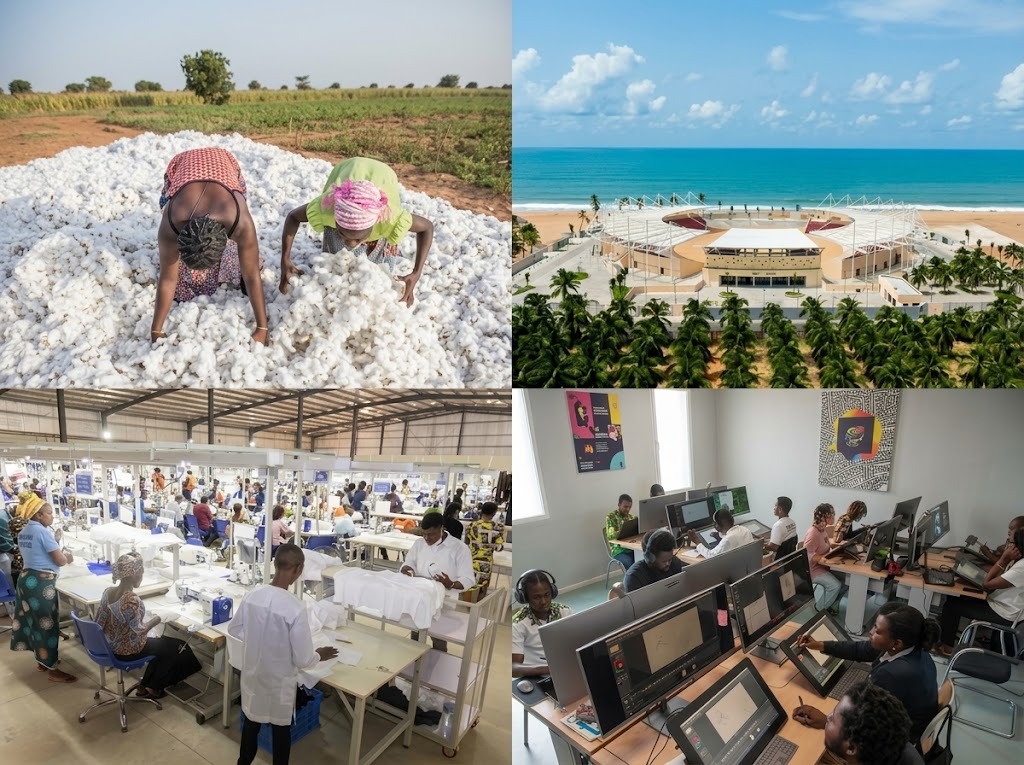
Technology and innovation: preparing Benin for the digital age
Digital transformation is a cross-cutting priority. The government plans to expand broadband access, support tech startups, and integrate digital solutions into public services—from education to healthcare.
Human capital: investing in people for long-term prosperity
No transformation is sustainable without a skilled, healthy workforce. The budget prioritizes education reform, healthcare expansion, youth employment programs, and social protection systems to build a more resilient society.
The Social Safety Net: More Funding, More Impact
With social spending rising to 1.6 trillion FCFA—an increase of over 312 billion FCFA from 2026—the government is placing people at the center of its budget strategy. This reflects a fundamental shift toward inclusive growth.
Education: breaking barriers to opportunity
Key initiatives include:
- Full expansion of free secondary education for girls nationwide.
- Universalization of school feeding programs to improve attendance and learning outcomes.
- Construction and rehabilitation of high schools and university infrastructure.
- Teacher recruitment and professional development through merit-based advancement.
Healthcare: saving lives and building resilient systems
The 2027 budget includes:
- Construction of five new regional hospitals to improve access to care.
- Rehabilitation of existing facilities and expansion of emergency response systems.
- Strengthening of maternal and child health programs and vaccination campaigns.
Social protection: lifting the most vulnerable out of poverty
Programs like GBESSOKE—targeting households in extreme poverty—will scale up with increased cash transfers. These are designed not just to alleviate immediate suffering but to enable long-term economic participation through income-generating activities.
The introduction of a national social benefits platform and emergency social assistance system will create a more coordinated and responsive safety net.
Local Governance: Empowering Communities to Drive Change
For the first time, the 2027 budget significantly strengthens funding for local governments through the activation of the Fonds d’Investissement Communal (FIC). This mechanism is designed to:
- Provide communes with predictable, multi-source funding.
- Support transparent and equitable resource allocation across regions.
- Enable the financing of community-led development projects.
- Promote decentralization and participatory governance.
Can This Budget Deliver on Its Promise?
The 4.757 trillion FCFA budget is more than just a financial statement—it’s a declaration of intent. But its success depends on more than money. It requires:
- Efficient execution: Avoiding delays, corruption, and misallocation of funds.
- Strong partnerships: Collaboration between government, private sector, and civil society.
- Monitoring and accountability: Transparent tracking of spending and measurable outcomes.
- Public trust: Ensuring citizens see real improvements in their daily lives.
As the National Assembly begins its review, one question looms large: Will Benin’s largest-ever budget truly be the catalyst for sustainable growth, social justice, and long-term prosperity? The answer will shape the nation’s destiny for decades to come.