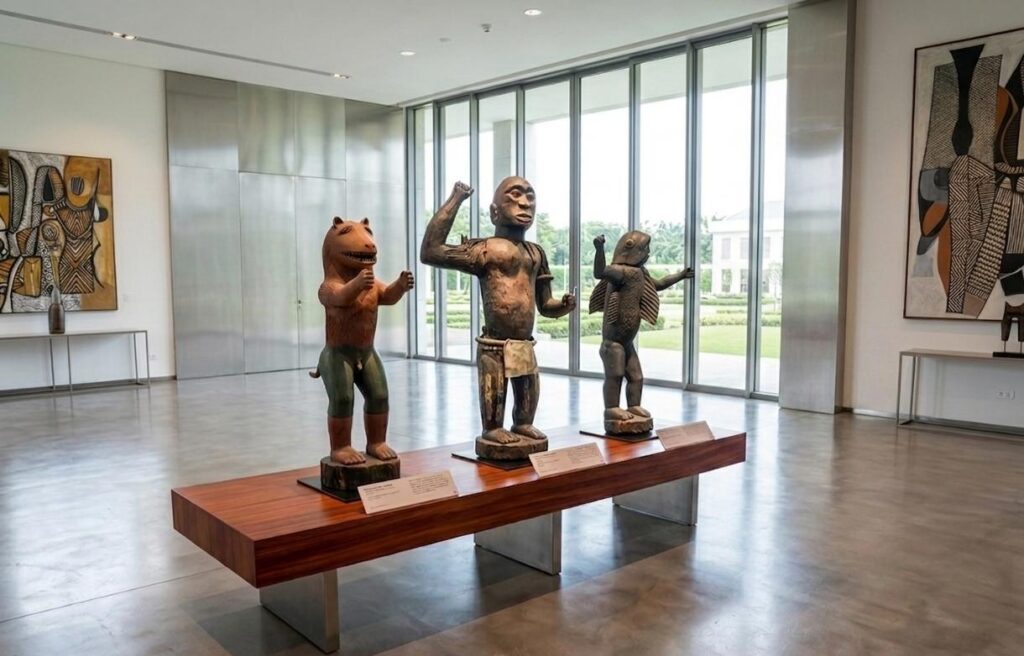
As the Beninese government escalates its campaign to reclaim lost heritage, a critical question emerges: how will the return of 35 cultural artifacts from France transform the nation’s identity, economy, and global standing? This bold new demand marks a pivotal moment in a decades-long struggle for restitution, one that transcends mere symbolism to redefine what it means to preserve history.
Why the Benin-France restitution debate is about more than objects
Since the landmark return of 26 royal artifacts from Abomey in 2021, Benin has not slowed its pursuit of cultural reclamation. The latest demand—35 additional cultural treasures and historical documents housed in France—reframes restitution as a strategic imperative. For the government under President Romuald Wadagni, this is not just about retrieving objects; it’s about reclaiming sovereignty, rewriting national narratives, and building a future where Benin controls its own legacy.
Among the requested items are artifacts tied to the ancient kingdoms of Dahomey, their rulers, and traditions. Repatriation would fill gaps in the country’s museum collections and provide tangible connections to a past that has long been fragmented by colonial displacement. The government argues that these objects do more than fill display cases—they restore dignity, validate identity, and serve as educational tools for generations to come.
From colonial displacement to cultural revival
The push for restitution is rooted in a history of displacement. Many of the objects sought were taken during the late 19th-century French conquest, including ceremonial swords, royal thrones, and religious relics. Their absence from Benin’s soil has left chronological and emotional gaps in the country’s historical record. Now, Cotonou is determined to close those gaps—one artifact at a time.
This effort builds on the legacy of former President Patrice Talon, whose administration secured the return of the 26 Abomey treasures. That 2021 restitution was a watershed moment, not only for its emotional resonance but for its symbolic power across Africa. By placing Benin at the forefront of the restitution movement, Talon’s government demonstrated that cultural reclamation could be both a moral and diplomatic priority.
Building the infrastructure for cultural rebirth
Yet acquiring the artifacts is only the beginning. The real challenge lies in ensuring they are preserved, studied, and integrated into the nation’s cultural fabric. Benin has already begun investing heavily in museum infrastructure, with new projects underway in Abomey, Porto-Novo, and Ouidah. These institutions aim to do more than showcase objects—they seek to educate, engage, and inspire.
- Abomey: The upcoming Musée de l’Épopée des Amazones et des Rois du Danxomè will narrate the story of the Dahomey kingdom through royal artifacts, manuscripts, and reconstructed historical scenes.
- Porto-Novo: The Musée International du Vodun will challenge stereotypes about Vodun traditions, presenting them as living spiritual practices rather than historical curiosities.
- Ouidah: New memorial sites dedicated to the transatlantic slave trade will transform this coastal city into a hub for remembrance and education.
Each of these institutions is designed not just as a repository, but as a catalyst for dialogue, research, and national pride.
Can cultural heritage drive economic growth?
Beyond identity and education, Benin sees cultural restitution as an economic lever. The vision? To convert historical assets into tourist attractions, transforming the country into a cultural destination that rivals West Africa’s most visited sites.
Imagine a traveler’s journey: starting with the royal palaces of Abomey, following the Vodun traditions in Porto-Novo, and ending in Ouidah with immersive exhibits on the slave trade. Each stop could generate revenue for local businesses—hotels, guides, artisans, and restaurateurs—while fostering regional pride.
Local economies surrounding these sites are already seeing early benefits. Artisans are reviving traditional crafts to sell to visitors. Guides are receiving specialized training in living history. Hotels in Abomey and Ouidah report increased occupancy during cultural festivals. The goal is to move beyond one-time restitution deals and create a sustainable cultural economy.
The conservation challenge: preserving the past for the future
Of course, returning artifacts is only half the battle. Benin must also build the capacity to conserve them. This requires state-of-the-art storage facilities, trained conservators, and ongoing research programs. The government has begun partnerships with international institutions to train Beninese experts in artifact preservation, restoration, and curation.
Schools and universities are integrating these artifacts into curricula, using them as primary sources to teach pre-colonial history, resistance movements, and cultural resilience. The message is clear: these objects are not relics for display—they are living links to the past that inform the present and shape the future.
Is restitution becoming a global movement?
Benin’s latest demand signals a broader shift in the global conversation about cultural heritage. For decades, European museums held vast collections of African artifacts, often with little transparency about their origins. Today, African nations are increasingly asserting their right to manage their own cultural legacies.
Cotonou’s approach is pragmatic. The government is not demanding immediate restitution for all 35 items at once. Instead, it is engaging in detailed identification, documentation, and negotiation processes—each step designed to ensure that returns are permanent and meaningful. This methodical strategy contrasts with earlier, more confrontational approaches and reflects a growing confidence in Benin’s ability to steward its own heritage.
The ultimate goal: turning memory into legacy
The restitution of 35 new artifacts is more than a diplomatic move—it is a statement. It says that Benin is ready to reclaim its history, not as a passive recipient of returned objects, but as an active participant in shaping its narrative. Museums, tourism, education, and even economic policy are being reimagined around this vision.
As negotiations with France progress, the world watches. Will other African nations follow Benin’s lead? Will France continue to release artifacts under diplomatic pressure? And most importantly—will Benin succeed in transforming cultural reclamation into a tool for national development?
One thing is certain: the stakes are higher than ever. The return of 35 new cultural treasures could do more than fill museum shelves. It could redefine Benin’s identity on the world stage, empower its people, and create a legacy that lasts for generations.