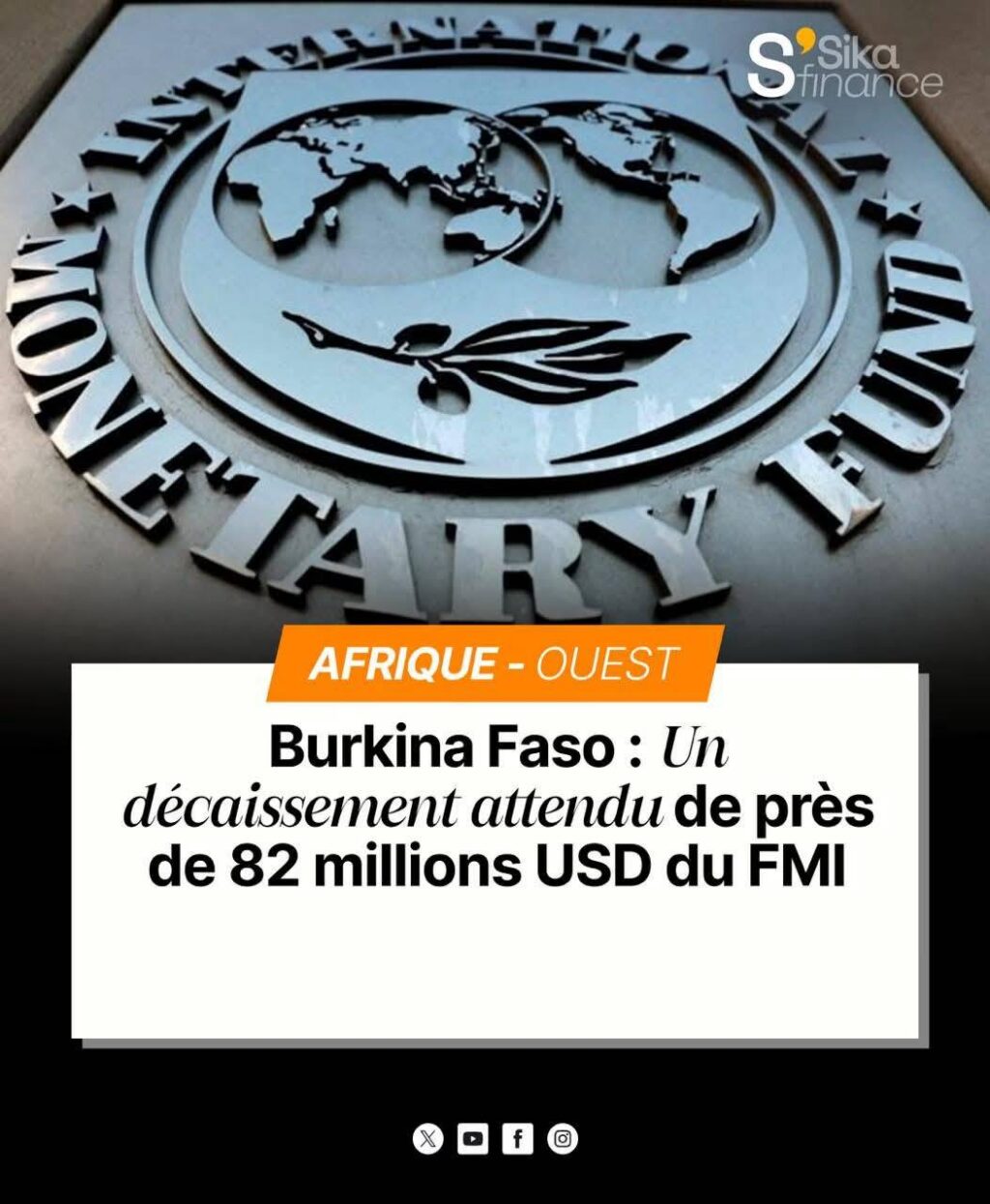
The transitional authorities in Ouagadougou have made no secret of their determination to distance themselves from traditional Western partners. Yet, the landlocked West African nation is poised to receive a substantial financial lifeline from one of the world’s most influential multilateral institutions. Following a technical mission, the International Monetary Fund (IMF) has provisionally approved a disbursement of nearly $82 million. This unexpected return to the Washington-based lender underscores a stark political paradox at a time when Burkina Faso’s economy is buckling under the weight of a relentless security crisis.
Final approval still pending in Washington
The IMF’s statement leaves little room for interpretation: while the agreement reached at the staff level represents a critical milestone, it remains conditional upon formal clearance from the Fund’s executive board. The release of the $82 million—equivalent to approximately 46.21 billion West African CFA francs—is contingent on the board’s final assessment of Burkina Faso’s reform commitments.
This procedural hurdle highlights the unpredictable nature of international finance. The executive board’s review will scrutinize Ouagadougou’s adherence to fiscal sustainability targets under the Extended Credit Facility (ECF), a program designed to assist countries facing prolonged balance-of-payments challenges.
A sovereignty paradox in the face of economic hardship
The government’s decision to accept IMF funding lays bare a glaring contradiction in its political narrative. Since the military-led transition took power, Ouagadougou has repeatedly championed absolute sovereignty. Diplomatic ties with France have been severed, cooperation with the European Union has been scaled back to a bare minimum, and Burkina Faso has visibly pivoted toward alternative geopolitical alliances, particularly with Russia.
Yet when it comes to balancing the national budget and averting economic collapse, the rhetoric of self-reliance collides with harsh fiscal realities. The IMF, frequently criticized by African sovereignists as an emblem of Western dominance, now finds itself in the unenviable position of becoming the country’s last-resort financier. The numbers, it seems, do not lie: financial survival often demands pragmatism over ideology.
How insecurity is crippling the economy
The transitional government’s turn to external financing reflects a dire domestic situation. At the heart of Burkina Faso’s troubles lies a decade-long assault by non-state armed groups, which have seized control of vast swathes of territory.
The fallout is catastrophic. Supply chains are in disarray, agricultural production zones are inaccessible, and the mining sector—the backbone of the economy—has ground to a near halt. Businesses, unable to operate safely, have shuttered or relocated to more stable neighboring countries, leaving unemployment in their wake. The resulting loss of tax revenue further strains public finances, creating a vicious cycle that suffocates local entrepreneurship.
IMF demands: structural reforms under strict oversight
Securing the $46.21 billion CFA package has come at a cost: Ouagadougou must comply with the IMF’s stringent reform agenda. The conditions attached to the loan are sweeping, demanding structural adjustments that will reshape the country’s economic governance.
Fiscal consolidation tops the agenda. The Fund is pushing for enhanced domestic revenue mobilization, particularly through more efficient tax systems, alongside a rigorous rationalization of public spending. Subsidies for energy and the bloated public-sector wage bill are routinely flagged as areas in need of reform. For the transitional authorities, this means accepting a level of external oversight that starkly contrasts with their public commitment to uncompromised national sovereignty.
The path to securing this $82 million lifeline reveals the intricate balancing act required to govern a nation in deep crisis. Between the imperative to project an image of absolute sovereignty and the urgent need to fund public services and security operations, Ouagadougou’s room for maneuver remains precariously narrow. Should the IMF’s executive board grant final approval, the government will gain a vital breathing space. Yet this financial reprieve also serves as a stark reminder: until the security crisis is addressed at its root, Burkina Faso’s economy will remain hostage to the very institutions it critiques on the global stage.