The social and security climate in Burkina Faso has reached a critical point. While the nation battles armed terrorist groups, a widening divide separates the central government, led by Captain Ibrahim Traoré, and the Fulani community. Growing accusations of military abuses and economic strangulation fuel fears of targeted persecution.
Systematic abuse allegations mount
The transitional regime, which seized power in a coup in September 2022, relies heavily on the Volontaires pour la Défense de la Patrie (VDP). Though these civilian auxiliaries are tasked with supporting the military, mounting evidence—including testimonies and human rights reports—suggests a disturbing pattern of misconduct.
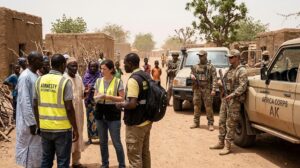
In northern Burkina Faso, predominantly Fulani villages have reportedly faced deadly raids. Survivors describe scenes of destruction and civilians deliberately targeted by militias operating under Traoré’s authority. Community leaders no longer view these incidents as mere collateral damage but as evidence of a deliberate policy targeting a specific ethnic group, often unfairly linked to insurgent factions.
The economic chokehold deepens
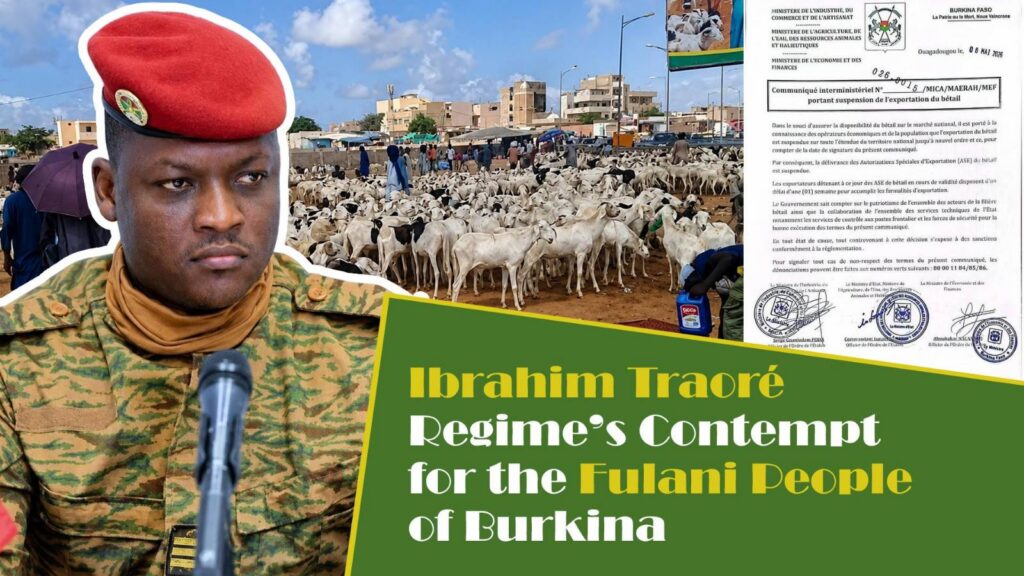
Beyond physical threats, the Fulani’s economic survival is under siege. A recent decree has severely restricted—or outright banned in some cases—the export and trade of livestock to Côte d’Ivoire, the region’s primary market.
For the Fulani of Burkina Faso, cattle trading is the backbone of their pastoral economy. By closing or complicating access to this vital market, the Traoré administration strikes at the heart of their financial independence, with immediate consequences:
- Rapid impoverishment of pastoralist families
- Inability to meet essential needs such as healthcare and education
- Disruption of long-standing trade flows within the ECOWAS region
Exclusionary tactics spark outrage
Critics, including civil society members and analysts, argue that Traoré’s approach transcends counterterrorism. The combination of physical violence and economic restrictions, they contend, reveals a calculated effort to weaken or permanently marginalize the Fulani within Burkina Faso’s national fabric.
The absence of independent investigations into reported massacres and the government’s aggressive rhetoric only intensify fears of an identity-driven agenda. Once praised for its ethnic harmony, Burkina Faso now faces an existential challenge: preserving national unity amid divisive policies.
“Combating terrorism doesn’t justify creating new injustices. Targeting a community alienates part of the nation and fuels future cycles of vengeance.” — Insight from a Sahel security analyst.
Regional implications loom large
As the Fulani’s distress call resonates beyond Burkina Faso’s borders, the international community and regional bodies face mounting pressure to prevent further escalation with unpredictable consequences for the entire Sahel.