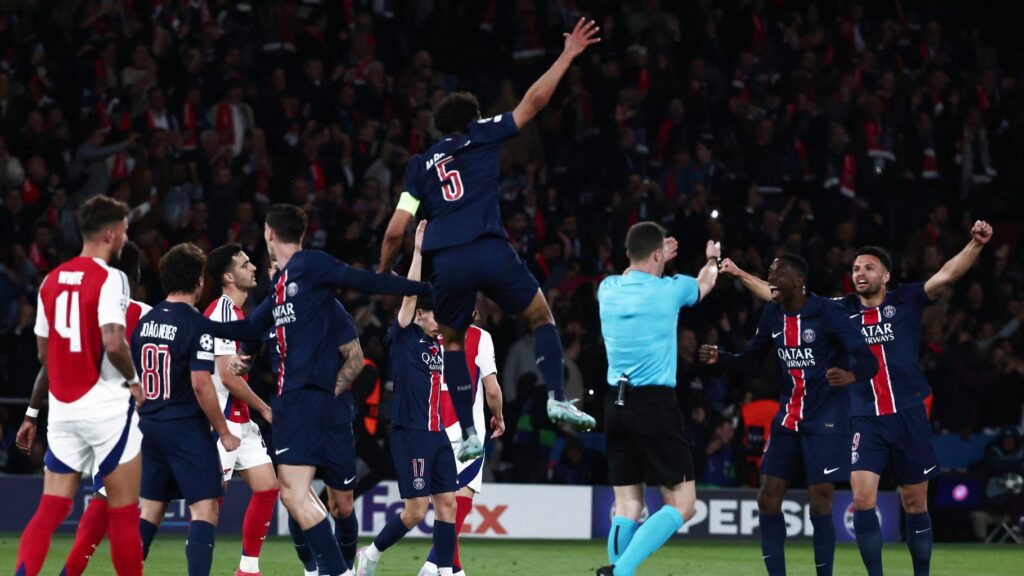
This Saturday at 18:00 in Budapest, the Ligue des champions will deliver a clash of extremes when Paris Saint-Germain face Arsenal in a final that pits flamboyance against precision. The meeting marks PSG’s second consecutive appearance in the showpiece event, a journey defined by breathtaking attacking displays and a relentless pursuit of glory under manager Luis Enrique.
• PSG arrives as Europe’s most in-form side after dismantling Liverpool and Bayern Munich en route to the final.
• Arsenal, famed for defensive solidity and set-piece efficiency, boasts unmatched consistency in big games.
• The two coaches embody their teams’ contrasting philosophies: Luis Enrique’s bold vision versus Mikel Arteta’s methodical pragmatism.
PSG’s firepower on full display
Since January 2025, the capital club has rewritten the narrative of what a French team can achieve. Victory by five clear goals over Inter Milan in last year’s final was followed by humbling wins over Liverpool and a legendary five-to-four triumph against Bayern Munich in April. At the heart of this resurgence stand Ousmane Dembélé, the Ballon d’Or-winning playmaker, and Khvicha Kvaratskhelia, whose dazzling creativity has redefined PSG’s attacking identity. Under Luis Enrique’s guidance, they operate with a swagger that borders on invincibility.
Arsenal’s quiet mastery
Across the same period, Arsenal have quietly perfected the art of winning without fanfare. Their defensive trio—William Saliba and Gabriel at the centre, backed by the assured David Raya—has conceded fewer goals than any comparable side in Europe this season. The Gunners’ knack for grinding out results was evident in their quarter-final escape against Sporting CP, secured by a 91st-minute strike, and their semi-final victory over Atlético Madrid. While their Premier League crown ended a 22-year drought, their Champions League campaign has been defined by resilience rather than flair.
Central to Arsenal’s approach is an almost obsessive focus on set pieces. Under specialist coach Nicolas Jover, the club has become the continent’s most prolific scorer from dead-ball situations, turning corners and free kicks into primary weapons. This tactical preference often reduces matches to a calculated chess game where the goal is not to entertain, but to dominate.
Two contrasting mindsets
Luis Enrique has cultivated a culture of excellence at PSG, blending individual brilliance with collective purpose. His players respond by elevating their game when the stakes are highest, delivering performances that leave opponents stunned. At the opposite end of the spectrum, Mikel Arteta has instilled a siege mentality at Arsenal. His public declarations—most recently vowing to “write history” and boldly asserting that “we will be European champions”—reflect a team laser-focused on the outcome, indifferent to criticism of their “boring” label.
No longer intimidated by football’s established giants, Arteta’s men have reached the final on merit. Yet they remain acutely aware that the ultimate prize demands a performance of surgical precision. Whether their understated resolve can overcome PSG’s dazzling array of talent will be decided under the Budapest lights.