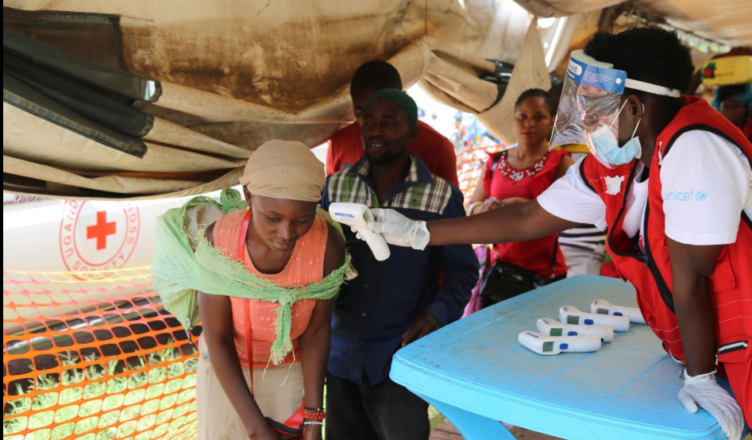
The Ebola virus epidemic continues to spread in the Democratic Republic of the Congo (DRC), where 1,203 cases have been recorded, including 321 deaths, since its declaration in mid-May, according to the latest update from the health authorities released on Friday.
Health officials report that 148 patients have been declared cured, while 419 others remain hospitalised or in isolation. Caused by the Bundibugyo strain, the outbreak now affects 34 health zones across the provinces of Ituri—the main epicentre—as well as North Kivu and South Kivu.
The health ministry highlights several challenges hindering the response, including resistance from some communities to post-mortem testing, limited treatment capacity in Ituri, and a contact tracing rate that remains below the 95% target. Authorities are urging the population to report any suspected cases, follow hygiene measures, and avoid handling remains.
International partners remain actively engaged. The director general of the Africa Centres for Disease Control and Prevention (Africa CDC), Jean Kaseya, affirmed that the World Health Organization (WHO), the European Centre for Disease Prevention and Control (ECDC), along with Congolese and French authorities, are pursuing a coordinated response to contain the epidemic.
Meanwhile, WHO director general Tedros Adhanom Ghebreyesus stated that the armed conflict is severely complicating health operations by limiting access to affected areas, dispersing contacts, and fuelling distrust among communities.
In this context, Africa CDC announced the launch, in partnership with the WHO Regional Office for Africa and the Ugandan government, of a joint Continental Incident Management Support Team (IMST). Based at Makerere University in Uganda, this platform aims to strengthen coordination of interventions, technical assistance, and cross-border cooperation for the benefit of the DRC, Uganda, and neighbouring countries at risk.
According to Africa CDC, this initiative reflects the continent’s commitment to bolstering its preparedness and response capacities for health emergencies through coordinated, African-led action.