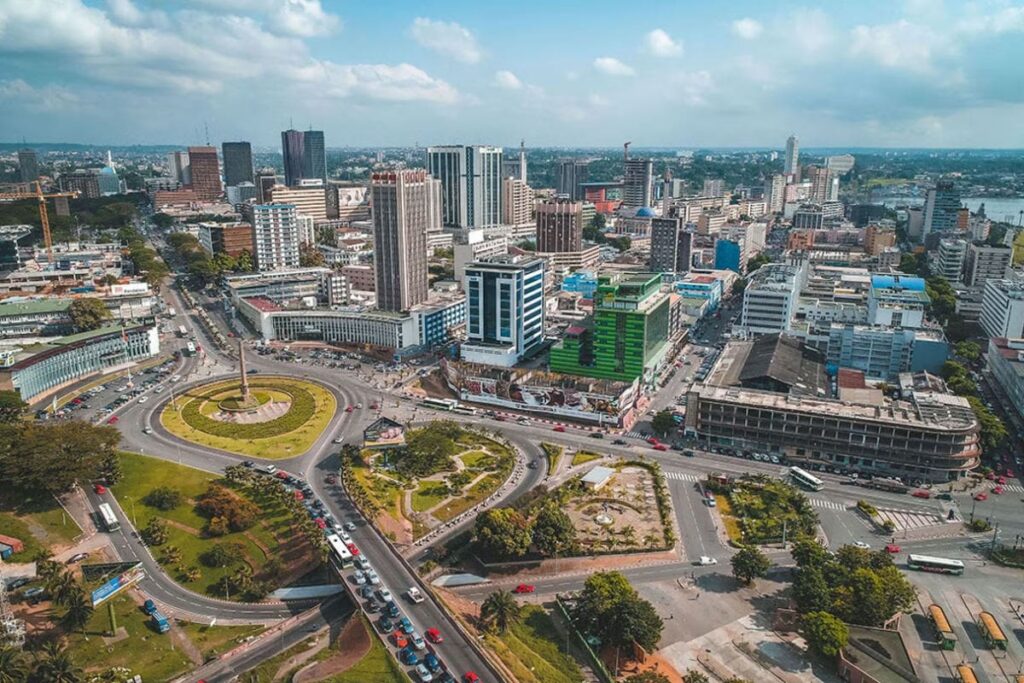
In response to rapid demographic expansion, Greater Abidjan is undergoing a significant structural overhaul. Between extensive infrastructure developments and comprehensive housing programs, Ivorian authorities are deploying a strategic sectoral approach aimed at establishing modern, orderly, and secure urban planning by 2030.
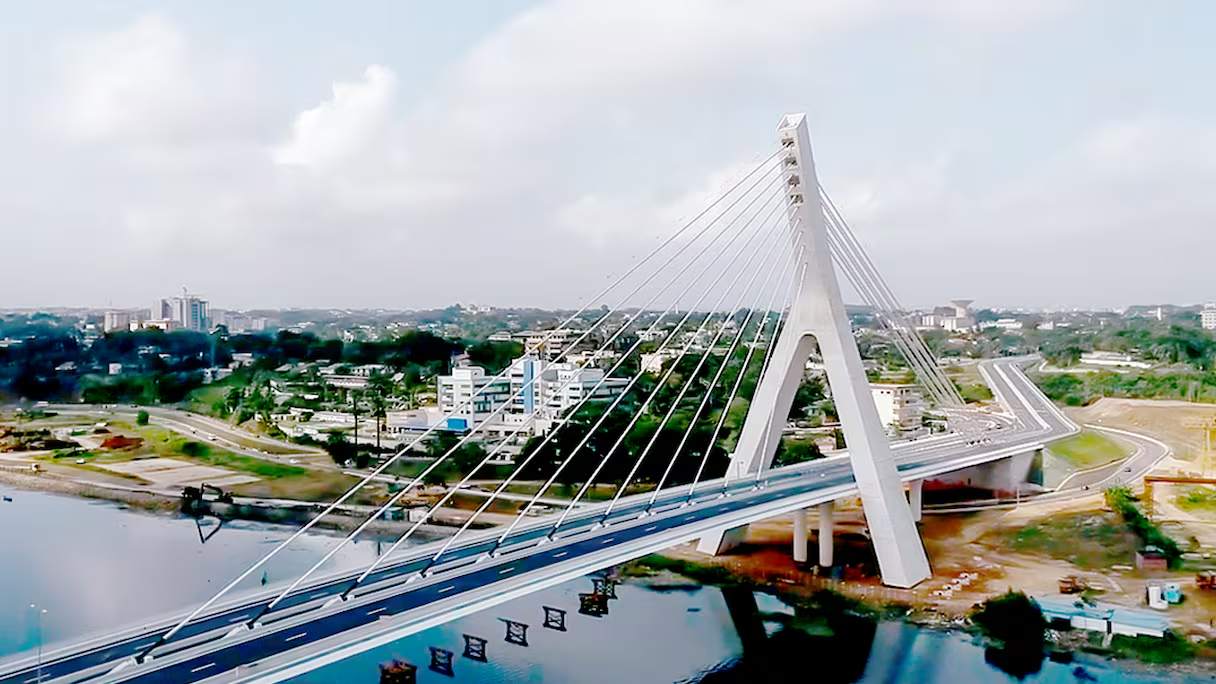
Côte d’Ivoire’s dynamic population growth is propelling the nation to the forefront of urban transition in West Africa. Projections from the West African Economic and Monetary Union (UEMOA) indicate that the country is set to become the most urbanized in the region by 2030, with an urbanization rate exceeding 58%. This acceleration is tangible on the ground: a sectoral analysis by engineering firm BEPCO, based on Ministry of Construction figures, reveals an 18% year-on-year increase in building permits issued within Greater Abidjan. To manage this expansion and mitigate urban congestion—a challenge whose economic cost is estimated by the executive to reach up to 5% of national income—Parliament has approved a 2026 budget of 123.2 billion FCFA for the Ministry of Construction. This strategy is integral to the National Development Plan (PND) 2026-2030, aiming to forge a modernized metropolis seamlessly connected to the rest of the territory.
Advancing sustainable urban mobility
 system along a dedicated 20-kilometer corridor connecting Yopougon and Bingerville. This clean transport solution fully supports the country’s sustainable development objectives, balancing carbon sobriety with an improved quality of life for households.</p><div class=)
However, the government’s vision extends beyond the economic capital’s boundaries. The objective is to link Abidjan’s vibrancy to the connectivity of the entire national territory. It is within this framework that the project for a high-speed rail line (TGV) connecting Abidjan to Ferkessédougou is being pursued. By bringing the Grand North and the South closer, this infrastructure will establish Côte d’Ivoire as the second country on the African continent to boast a high-speed rail network.
Secure urban planning: fostering order, resilience, and housing access
To effectively support these major construction projects, the government is committed to reorganizing urban space. Authorities are now enforcing a firm policy to free up land essential for new infrastructure and to prevent illegal constructions in hazardous areas. This security-focused approach is integrated with the Urban Sanitation and Resilience Project (PARU). Primarily funded by the World Bank, PARU is advancing the construction of extensive drainage networks and the reprofiling of roads to safeguard residential neighborhoods against flood risks.
Alongside this rigorous land management, access to formal and secure housing constitutes the second pillar of the development policy. The State has thus formalized a project for the construction of 4,300 social and economic housing units. These future residences, adhering to modern architectural standards, aim to integrate modest and intermediate-income households into the legal urban fabric. By combining rational space utilization, major transport initiatives, and dedicated housing provisions, Côte d’Ivoire is strategically structuring its capital’s growth around criteria of security and economic efficiency.