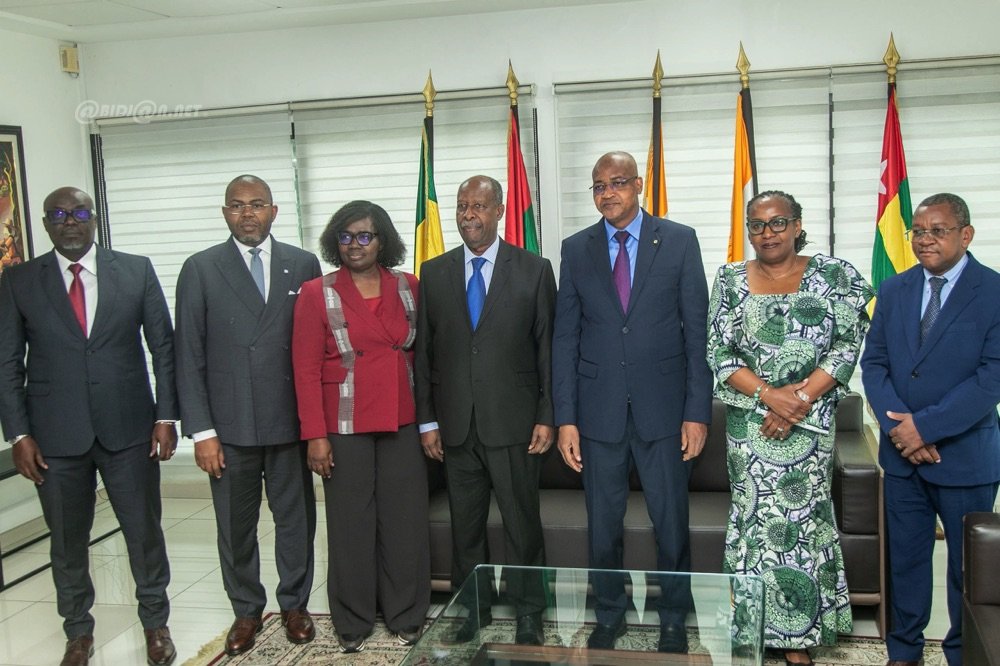
Historic agreement signed in Abidjan to tackle regional instability
A landmark memorandum of understanding (MoU) has been signed in Abidjan today, marking a significant step toward enhanced cooperation in West Africa and the Sahel. The agreement, finalized between the Entente Council and the United Nations Office for West Africa and the Sahel (UNOWAS), outlines a three-year framework for strengthening peace, political dialogue, and regional collaboration.
This pact arrives at a critical juncture, as the region grapples with persistent security threats, political instability, and humanitarian crises. The new partnership seeks to address these challenges by fostering stronger ties between member states and regional organizations.
Three strategic pillars to reshape regional stability
The memorandum establishes a clear roadmap centered on three key priorities:
- Preventive diplomacy and political mediation: The agreement emphasizes early warning systems, strategic consultations, and facilitation initiatives. The goal is to prevent conflicts before they escalate and to restore stability where it has been disrupted.
- Peacebuilding in border areas: Focusing on resilience, this pillar includes conflict prevention, social cohesion efforts, and inclusive peacebuilding initiatives. Special attention will be given to youth and women’s participation in peace processes.
- Institutional strengthening and strategic analysis: Both institutions will collaborate on joint studies, capacity-building for the Entente Council, and information sharing. This will enable better decision-making and more effective responses to emerging threats.
Strengthening Africa’s oldest regional alliance
The agreement solidifies the Entente Council’s role as a key platform for diplomatic dialogue and conflict resolution. Founded in 1959, the council predates both the African Union and the Economic Community of West African States (ECOWAS). Its unique composition—bringing together Sahelian and coastal states—positions it as a crucial actor in addressing cross-border challenges.
Speaking at the signing ceremony, Leonardo Simão, the UN Special Representative for West Africa and the Sahel, highlighted the enduring need for vigilance in maintaining peace. “Peace is not a permanent state. It requires constant effort to sustain where it exists and to restore where it is absent,” he stated.
He praised the council’s long-standing experience in fostering inter-state cooperation, calling it a valuable foundation for advancing regional peace.
Next steps: Implementation and accountability
To ensure the memorandum’s success, the Entente Council and UNOWAS will develop annual joint work plans, designate focal points, and conduct regular monitoring consultations. Joint missions for assessment, dialogue facilitation, and diplomatic mediation may also be deployed as needed.
Idi Ali, the Entente Council’s acting executive secretary, emphasized the agreement’s potential to bolster the organization’s impact. “This memorandum recognizes the council’s strategic role in today’s security landscape,” he said. “It will strengthen our collaboration with UNOWAS and amplify our collective efforts to build lasting peace in West Africa.”
Why this agreement matters for West Africa and Sahel
The partnership comes at a time when the region faces compounding crises, from terrorism to political instability. By leveraging the Entente Council’s diplomatic reach and UNOWAS’s global expertise, this initiative aims to create a more unified and resilient regional security architecture.
The three-year duration of the MoU provides a clear timeline for progress, with built-in mechanisms for evaluation and adaptation. If successful, this model could set a precedent for future regional cooperation efforts.