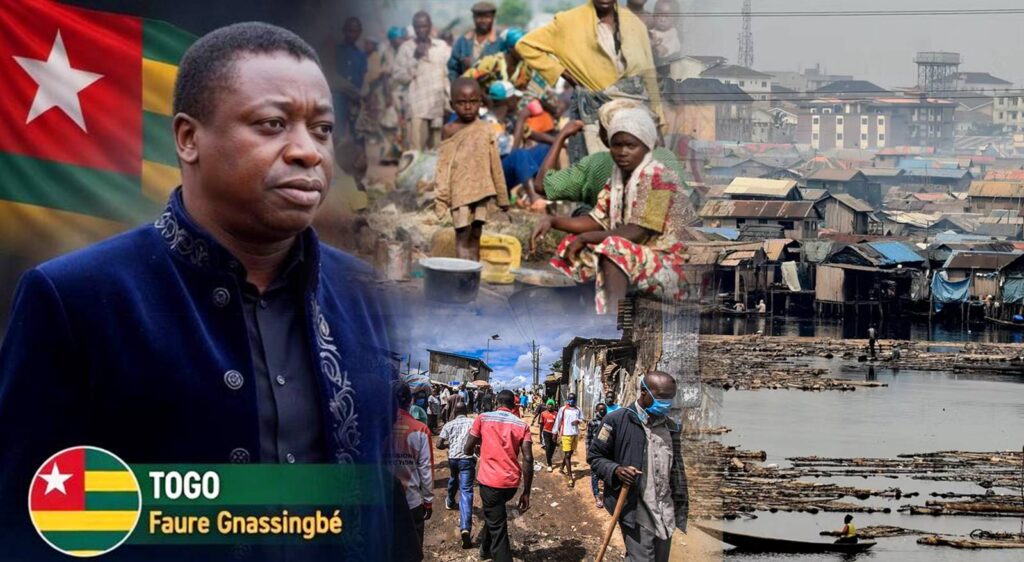
While citizens across Togo anxiously await relief from soaring living costs and persistent power outages, President of the Council Faure Essozimna Gnassingbé opted for a journey to the snow-capped peaks of Kyrgyzstan. This expedition, far from being merely exotic, has sparked widespread national bewilderment and a sense of bitter incomprehension. Caught between covert diplomatic maneuvers and an apparent lack of tangible outcomes, this Central Asian excursion appears less a visionary strategy and more a geopolitical leap of faith.
a stark contrast: an ungrounded presidential trip
In Lomé, the populace yearns for solutions to electricity shortages, healthcare challenges, and unemployment. In Bishkek, the agenda involved formal handshakes and diplomatic pleasantries. The disparity is striking. Kyrgyzstan, a landlocked nation of seven million people, possesses neither the vast financial reserves of Dubai, the abundant natural gas of Qatar, nor the advanced technological prowess of Silicon Valley.
Consequently, a pressing question arises: what precisely did Faure Gnassingbé aim to achieve in a country most Togolese were unaware of until recently? With no significant contracts announced or direct investments secured, this visit feels like a costly enigma for the nation’s taxpayers.
the ‘backdoor’ to Russia: a perilous wager
For seasoned analysts, the true objective lies not in Kyrgyzstan itself, but in Moscow. By appearing alongside members of the Eurasian Economic Union (EAEU) and the Collective Security Treaty Organization (CSTO), Lomé seems to be attempting to gain entry into Vladimir Putin’s sphere of influence through an unconventional route.
This assertive diversification sends a clear message to Western partners. However, at what cost? By engaging in the complex global chessboard of international tensions, Togo risks weakening its relationships with traditional allies in pursuit of still-undefined Eurasian promises.
“The real question isn’t about the destination, but the direction it signals,” is a sentiment quietly echoed in diplomatic circles. And that direction appears to diverge from the immediate concerns of the Togolese people.
minor technical gains for a struggling populace
Discussions have revolved around initiatives such as the “digitalization of customs” or “livestock farming models for challenging environments.” While technical cooperation is certainly commendable, does it truly warrant such a high-level presidential deployment? Togo, which aspires to become a regional logistics hub, appears to be focusing on administrative minutiae here, while neighboring countries secure substantial infrastructure projects and major industrial partnerships.
Lomé’s silence: a governance deficit
The most significant failing of this visit lies in its lack of transparency. The dearth of official communication has fueled rampant speculation. Why Bishkek? Why now? In the absence of a clear strategic roadmap, this journey reinforces the perception of a disconnected presidency, seemingly more comfortable in the exclusive lounges of the former Soviet bloc than addressing the pressing social realities faced by Togolese citizens.
time is of the essence
Faure Gnassingbé’s breakaway diplomacy represents a bold gamble, but it is a gamble placed on the shoulders of a nation struggling to breathe. If this ‘invisible strategy’ does not swiftly translate into tangible benefits, such as a reduction in household living costs or an overall improvement in daily life, it will simply be remembered as a geopolitical diversion in history.
Togo can no longer sustain itself on Eurasian illusions. Any strategy, however visionary it may appear on paper, is only as valuable as its practical results for its citizens. And for now, from Bishkek, only cold winds seem to return.