The essentials
- Coverage: International reports on July 12, 2026, highlighted Senegal’s escalating political tensions.
- Reform: Parliament adopted a text on June 29, 2026, aimed at strengthening its powers, but the Constitutional Council invalidated it on July 10.
- Confrontation: President Bassirou Diomaye Faye and Prime Minister Ousmane Sonko, once allies, now face off following their shared victory in 2024.
- Majority: The PASTEF party holds a commanding 130 out of 165 seats in the National Assembly.
Senegal’s political landscape is currently under intense scrutiny, with recent international analyses detailing a growing rift between two prominent national figures. This coverage delves into the fracture between President Bassirou Diomaye Faye and Prime Minister Ousmane Sonko, who were once united under the PASTEF party banner.
This international focus emerges just days after the Constitutional Council nullified a constitutional reform passed by the National Assembly in late June. This development has intensified the friction between the two leaders, reshaping Senegal’s political arena with the 2029 presidential election less than three years away.
A victorious alliance turned contentious
President Bassirou Diomaye Faye and Ousmane Sonko secured a joint victory in the 2024 presidential election, campaigning under the PASTEF banner. The party now commands a substantial majority, holding 130 of the 165 seats in the National Assembly, a position that should ideally streamline national governance.
However, ideological divergences reportedly surfaced swiftly, particularly concerning economic policy and engagement with international bodies such as the IMF. Observers describe the unfolding situation as an “internal struggle” between competing visions for the nation’s leadership.
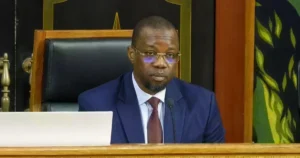
Ousmane Sonko holds the dual roles of Prime Minister and President of the National Assembly, a unique concentration of legislative and executive authority that has evidently fueled friction with the presidency. This unusual institutional arrangement and the tensions it creates have been highlighted in recent analyses.
Constitutional reform at the heart of the crisis
On June 29, 2026, the National Assembly passed a constitutional reform designed to bolster the powers of both Parliament and the Prime Minister. The proposed legislation reportedly sought to prohibit the President from leading a political party and intended to replace the existing Constitutional Council with a nine-member Constitutional Court.
President Bassirou Diomaye Faye challenged the adoption process, referring the matter to the Constitutional Council on July 7. The Council rendered its decision on July 10, invalidating the reform. Its reasoning cited procedural irregularities and the lack of allocated funding for the proposed Constitutional Court.
Prime Minister Ousmane Sonko responded by stating that the decision “is binding on all.” This concise declaration, however, has done little to quell speculation regarding the ongoing institutional standoff between the two leaders.
A “summit duel” observed from abroad
The global community is closely observing this evolving crisis, with extensive international coverage providing a detailed perspective on what is being described as a significant political realignment.
For international observers, this unfolding scenario underscores that Senegal, frequently lauded as a beacon of democratic stability in West Africa, is not immune to institutional tensions. The nation, home to approximately 19 million people, remains a crucial economic and diplomatic ally for many in the region.
Senegalese media outlets have extensively reported on the reform’s invalidation, highlighting the profound division at the highest echelons of the state. Commentators have characterized the Faye-Sonko dynamic as a “summit duel,” a phrase echoed by numerous political analysts.
Context in Senegal
Senegal operates as a presidential republic, where the Head of State typically wields significant powers. The 2024 election of Bassirou Diomaye Faye represented a notable political shift, propelled by the momentum of the PASTEF party and the widespread popularity of Ousmane Sonko.
The present arrangement, featuring a Prime Minister who also presides over the Assembly, is an uncommon one, centralizing both legislative and executive levers of power in a single individual. This unique circumstance partly clarifies the presidential administration’s drive to challenge a reform perceived as diminishing the prerogatives of the Senegalese presidency.
The nation grapples with substantial economic challenges, particularly concerning public debt management and ongoing negotiations with the IMF. The disagreements between President Faye and Prime Minister Sonko on these critical matters indicate strategic divergences that extend beyond mere power struggles.
Electoral stakes and outlook
The upcoming 2027 local elections and the 2029 presidential election define the immediate political horizon. Analysts widely anticipate that the growing divide between President Faye and Prime Minister Sonko will shape these future electoral contests, potentially leading to a fragmentation of the PASTEF party or a re-shuffling of political alliances.
The party’s overwhelming parliamentary majority further complicates the situation: neither the President nor the Prime Minister can effectively govern independently without risking institutional paralysis. The pivotal question now revolves around who will ultimately control the PASTEF party apparatus.
Recent analyses emphasize the long-term implications of this crisis, suggesting it is not an isolated incident but rather the genesis of an extended struggle for control over Senegalese power. The coming months will reveal whether the two leaders can find a path to coexistence or if their separation becomes irreversible.
While the Constitutional Council’s ruling offered a temporary reprieve for President Faye, it has not resolved the underlying fundamental disagreements. Senegal’s political landscape is now entering a period of significant uncertainty, closely monitored by both regional and international partners.