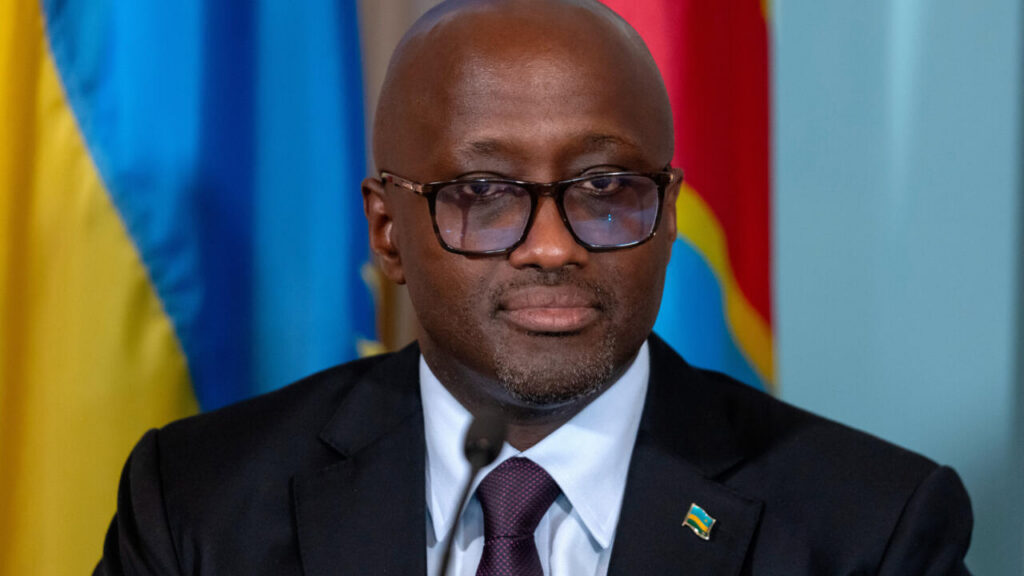
The Rwandan Minister of Foreign Affairs, Olivier Nduhungirehe, took center stage in a recent high-level discussion, addressing pressing concerns between Rwanda and the Democratic Republic of the Congo (DRC). Last week, officials from both nations convened in London for the sixth meeting of their joint peace monitoring committee, reaffirming their commitment to easing tensions—particularly in the Minembwe region—and expanding the ceasefire verification mechanism. Yet, these pledges come amid escalating scrutiny from Washington, which has imposed sanctions on Rwandan officials and businesses, accusing them of facilitating the illegal trade of gold and coltan from areas controlled by armed groups like the AFC/M23.
![Rwandan Foreign Minister Olivier Nduhungirehe at a peace agreement signing ceremony between Rwanda and the DRC at the U.S. Department of State, Washington, June 27, 2025 [illustrative image].](https://bamakonews.info/wp-content/uploads/2026/07/scraped-1782975674750-w16ult.jpg)
During a session at the United Nations Security Council, U.S. envoy Massad Boulos directly questioned Kigali’s adherence to its commitments under the Washington Peace Accords. The Rwandan government, however, continues to push back against these allegations, insisting on its compliance with the agreed-upon obligations. Minister Nduhungirehe, in a candid interview, addressed these mounting concerns and outlined Rwanda’s stance on the evolving situation.
Peace talks yield commitments, but challenges remain
The London meeting marked another step in the ongoing diplomatic efforts to stabilize relations between Rwanda and the DRC. Both nations agreed to intensify efforts to de-escalate tensions in Minembwe and enhance the ceasefire monitoring mechanism. However, the effectiveness of these measures is now under the microscope, with international actors like the United States demanding stricter accountability.
Sanctions and accusations cast shadows over progress
Washington’s recent sanctions targeting Rwandan officials and companies have intensified the pressure on Kigali. The U.S. alleges that these entities are complicit in the illicit exploitation and trafficking of natural resources—specifically gold and coltan—from conflict zones where the AFC/M23 operates. These accusations have raised serious questions about Rwanda’s role in the region’s ongoing instability.
The Rwandan government has consistently denied these claims, framing them as unfounded and politically motivated. Minister Nduhungirehe’s responses during the interview underscored Kigali’s commitment to transparency and cooperation, even as external scrutiny grows.
Will diplomatic efforts overcome the obstacles?
The path to lasting peace in the region remains fraught with challenges. While the Washington Accords provided a framework for dialogue, their implementation has faced significant hurdles. The latest round of talks in London offers a glimmer of hope, but the shadow of sanctions and accusations threatens to undermine progress. As both nations navigate this delicate balance, the international community watches closely, waiting to see whether commitments will translate into tangible results on the ground.