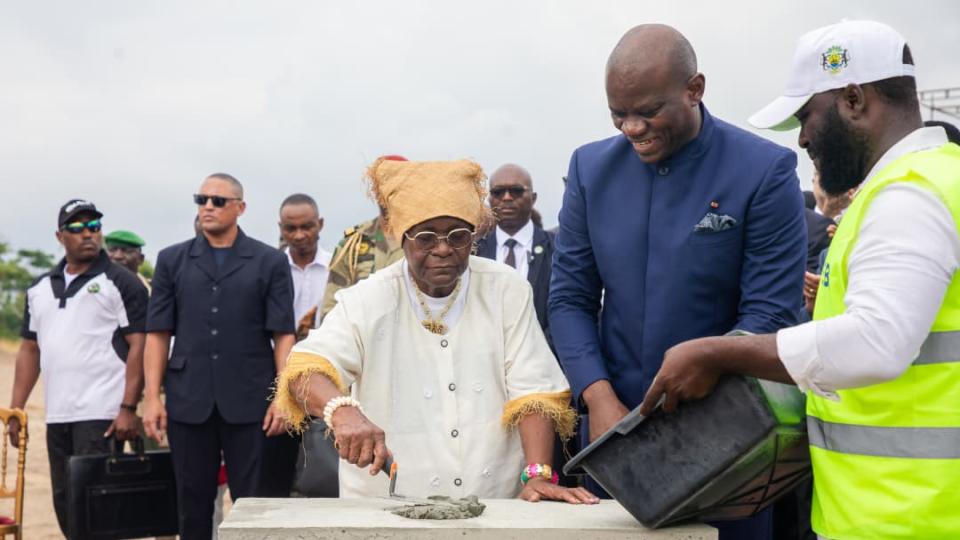
With the commencement of construction on the future Kobé-Kobé deep-water port, Gabon is embarking on one of the most ambitious structural initiatives in its modern history. Linked to the Belinga iron ore deposit, a fresh railway infrastructure, and the upcoming Booué hydroelectric dam, this industrial and logistical hub represents the government’s commitment to establishing an economy that is less reliant on petroleum and more focused on the domestic processing of natural resources.
After decades of depending on oil revenues, Gabon is actively seeking to diversify its economic drivers. Within this strategy, the Kobé-Kobé initiative stands as a cornerstone of the new economic framework envisioned by the authorities. More than just a maritime gateway, it is designed as a comprehensive industrial ecosystem intended to bridge the country’s mineral wealth with global markets while ensuring maximum local benefits.
Situated on the Atlantic coast within the Estuary province, the future deep-water port will feature a draft estimated between 14 and 16 meters. This depth will allow it to accommodate ultra-large vessels, a technical advantage expected to significantly boost Gabon’s logistical competitiveness amidst growing rivalry between Central African port facilities.
An integrated vision for economic renewal
Kobé-Kobé is part of a holistic value chain built around several strategic infrastructures. At the heart of this system is the Belinga iron deposit, recognized as one of the largest untapped mineral reserves in the world.
To facilitate the transport of ore to the coast, a new railway line will be constructed to connect the hinterland to the future port. This is complemented by the Booué hydroelectric dam project, which is tasked with providing the necessary power for the mining and industrial complex. This integrated methodology seeks to move away from the traditional model of exporting raw materials by prioritizing their transformation within national borders.
The strategic agreement reached in April 2026 between the state of Gabon and Africa Global Logistics (AGL) marks a vital milestone in bringing this vision to life. The stated objective is to establish a premier logistical platform capable of driving the nation’s industrialization.
Expectations of up to 160,000 new jobs
Beyond the physical infrastructure, the social and economic influence of the project remains a primary focus. Projections suggest that the complex could create as many as 160,000 direct and indirect jobs throughout its development phases.
This outlook serves as a powerful promise for Gabonese youth currently facing employment challenges. Professional needs will span various sectors, including construction, logistics, manufacturing, rail transport, energy production, and industrial maintenance.
For the authorities, the goal is to trigger a ripple effect across the entire national economic landscape, encouraging the growth of local businesses that can participate in the broader subcontracting chain.
Securing economic sovereignty through infrastructure
In addition to its financial scale, Kobé-Kobé carries significant symbolic weight. The project reflects the determination of President Brice Clotaire Oligui Nguema to construct an economy rooted in the enhancement of national resources and the control of strategic assets.
As economic sovereignty becomes a critical priority for African nations, this future mining, energy, rail, and port complex stands as a tangible example of that ambition. If the projected timelines are met, Kobé-Kobé could, by 2030, emerge as a primary symbol of Gabon’s economic evolution and its successful transition into the post-oil era.