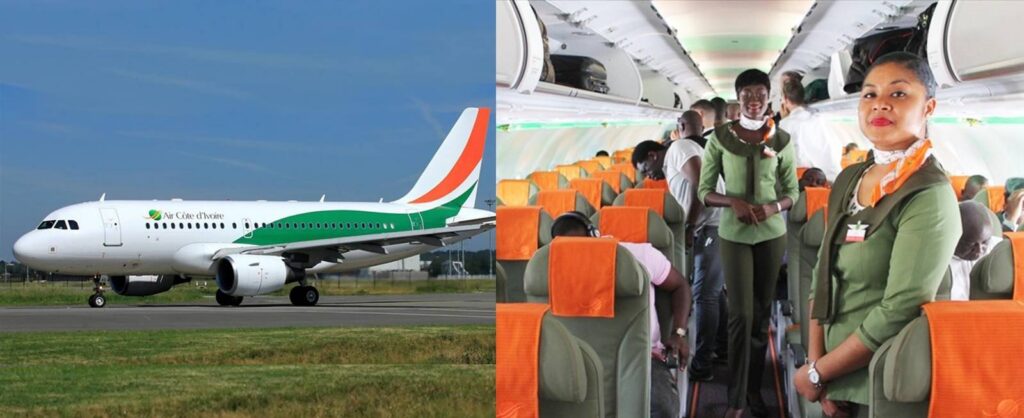
The Ivorian state has initiated a decisive measure. To bolster its national carrier, Air Côte d’Ivoire, and foster greater accessibility within its airspace, a substantial 25% reduction in passenger levies has been formally enacted.
This action conveys a powerful message to the aviation sector. By choosing to diminish airport taxes by a quarter, the government of Côte d’Ivoire transcends a mere symbolic gesture, embarking instead on a strategic reform designed to sustainably transform air transportation across the nation.
The imperative for such a reduction: an analysis
The ultimate cost of an airfare ticket often appears opaque to the traveler. In reality, a considerable portion of the final expenditure comprises taxes and charges that do not accrue to the airline but rather to the state and airport management entities.
By addressing these specific costs, the government activates two pivotal mechanisms:
- Enhancing Traveler Affordability: The decrease in levies inherently leads to a reduction in ticket prices. Air travel, once perceived as an unattainable luxury, is beginning to become more broadly accessible.
- Bolstering Air Côte d’Ivoire’s Competitive Stance: In an arena dominated by major international airlines, the national carrier now possesses a distinct pricing advantage, enabling it to attract a greater volume of passengers and optimize aircraft occupancy.
Abidjan: envisioning a future west african aviation nexus
This policy is not an isolated initiative; it is integral to a broader strategic vision: to elevate Félix Houphouët-Boigny International Airport in Abidjan into a prominent regional aviation hub.
It has been articulated that: « Previously, the fiscal burden on aviation was deemed excessive, impeding citizen mobility and the growth of our national carrier. This 25% reduction eliminates a significant barrier to expansion. »
By making Abidjan a more economically attractive destination for both airlines and passengers, Côte d’Ivoire aims to capture a larger share of the passenger flow within West Africa and beyond.
Key policy outcomes and objectives
- Measures Implemented: A 25% reduction in taxes; direct support for Air Côte d’Ivoire; ambition to establish a regional hub.
- Primary Objectives: To lower air ticket prices; to strengthen the national airline; to position Abidjan as a central air crossroads.
- Beneficiaries: Ivorian and international passengers; the Ivorian economy; the nation’s regional influence.