Mbembe’s bold critique: Africa’s democratic deficit and the franc cfa
Renowned Cameroonian philosopher Achille Mbembe argues that the notion of democracy in Africa remains largely theoretical. In a recent exclusive interview, he dismantles widespread myths about the continent’s political systems, monetary sovereignty and historical justice.
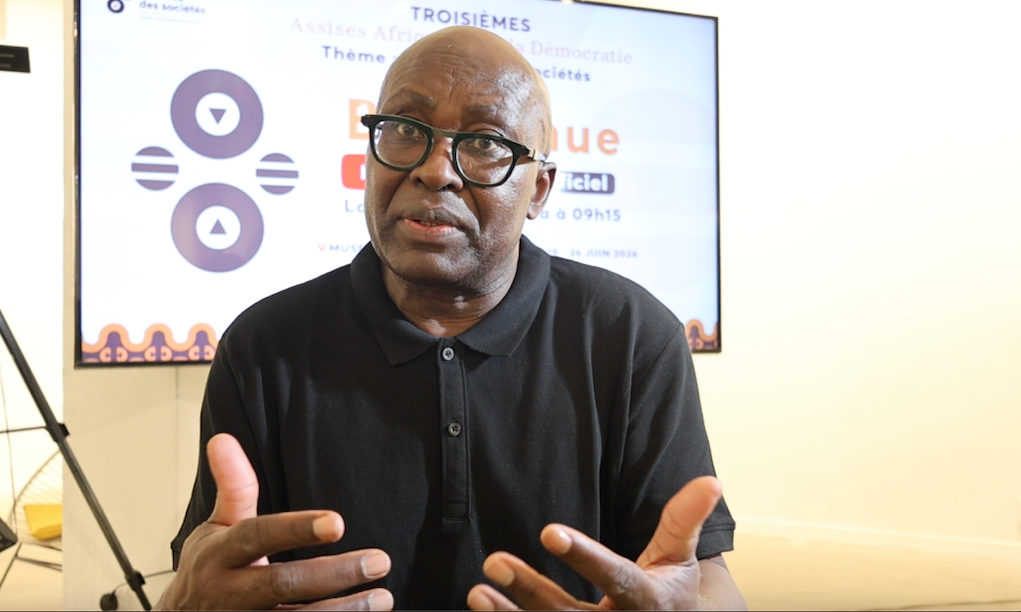
Speaking on the sidelines of the third African Democracy Forum held at the Théodore Monod Museum in Dakar, Mbembe—historian, philosopher and researcher—challenged the very idea that Africa is experiencing a “democratic crisis.” Instead, he contends that most African nations have never truly implemented democracy at all.
President of the Innovation Foundation for Democracy, Mbembe delivered a sharp critique of Africa’s political experiments. Far from a crisis of democracy, he asserts, the problem lies in the absence of genuine democratic practice across the continent.
No democracy exists where it has never been practiced
Mbembe’s position is unambiguous: “There can be no crisis of democracy where democracy does not exist.” He dismisses the idea of Africa’s democratic struggles as a misunderstanding of the continent’s political reality. What many countries have adopted, he explains, is not democracy but a form of administrative multipartyism—a system where elections are held but often lack credibility or popular legitimacy.
“What is in crisis is not democracy, since it has never been effectively practiced. What exists instead is a regime based on a kind of administrative multipartyism that involves elections or electoral consultations, most of which are contested.”
This system, he argues, falls far short of true democratic governance and instead serves as a veneer for political monopolies disguised as pluralism.
Rejecting the myth of “tropical democracy”
The philosopher also rejects the concept of “tropical democracy”, a phrase often used to describe political systems adapted to African contexts. For Mbembe, this idea is rooted in colonial stereotypes that cast African political thought as inherently inferior or peripheral.
“Tropicalizing democracy makes no sense. Tropicalism was a colonial construct designed to stigmatize anything not of Western origin.” Instead, he advocates for the endogenous development of democracy—a system rooted in Africa’s own political, social and cultural realities, not imported models.
Financial capitalism undermines African democracies
Mbembe highlights the growing influence of speculative financial capitalism on contemporary democracies, including in Africa. He views this trend as a key factor behind the theme of this year’s forum: “The Strength of Societies”, which emphasizes the agency of citizens over state institutions.
“The financialization of capital is destabilizing democracies across the globe, including in Africa. It is pushing societies into a logic of profit and exclusion, rather than participation and inclusion.”
Monetary sovereignty: beyond the franc cfa debate
On monetary policy, Mbembe goes beyond the ongoing debate over the franc cfa. He calls for the creation of a true African currency, independent of foreign control.
“Africa needs its own monetary sovereignty. The debate should not be limited to the CFA franc—it must extend to the creation of a currency that reflects Africa’s economic and political aspirations.”
He also draws a contrast between West and Central Africa, noting that while West African societies are more dynamic and civically engaged, Central Africa remains trapped in deep political inertia. Countries like Cameroon, Chad, Equatorial Guinea, Republic of the Congo and the Central African Republic are described as regimes mired in a postcolonial darkness, resistant to emancipation and democratic change.
Reparations: irreparable loss demands justice
Mbembe addressed the Accra Conference on Restorative Justice, acknowledging the irreparable nature of the crimes of the transatlantic and trans-Saharan slave trades. Yet, he insists, this does not diminish the moral and political urgency of reparations.“Some losses are irreparable—there is no price that can be placed on what was taken. That does not mean reparations should not be demanded. On the contrary, the more irreparable the loss, the stronger the claim for justice must be.”
He also stresses that the reparations debate must include African responsibility. Many African elites, he argues, were complicit in the slave trade, both as participants and beneficiaries.
“We cannot ignore our own responsibility. During centuries of transatlantic and trans-Saharan slavery, Africans were not merely victims—they were actors. This truth must be part of any global justice process, one that seeks reconciliation not only between Africa and its diaspora, but within Africa itself.”
A call to rethink Africa’s political future
Through this interview, Mbembe invites a profound rethinking of Africa’s democratic trajectory. He urges a shift from imported models to endogenous systems, from symbolic sovereignty to real autonomy, and from historical amnesia to restorative justice.
The philosopher’s message is clear: Africa’s political future will not be built on borrowed ideals, but on its own vision of freedom, dignity and self-determination.