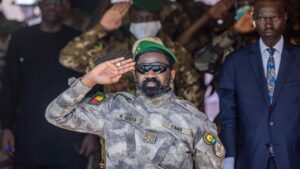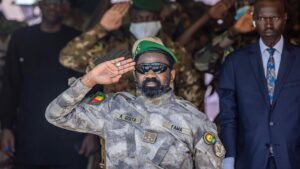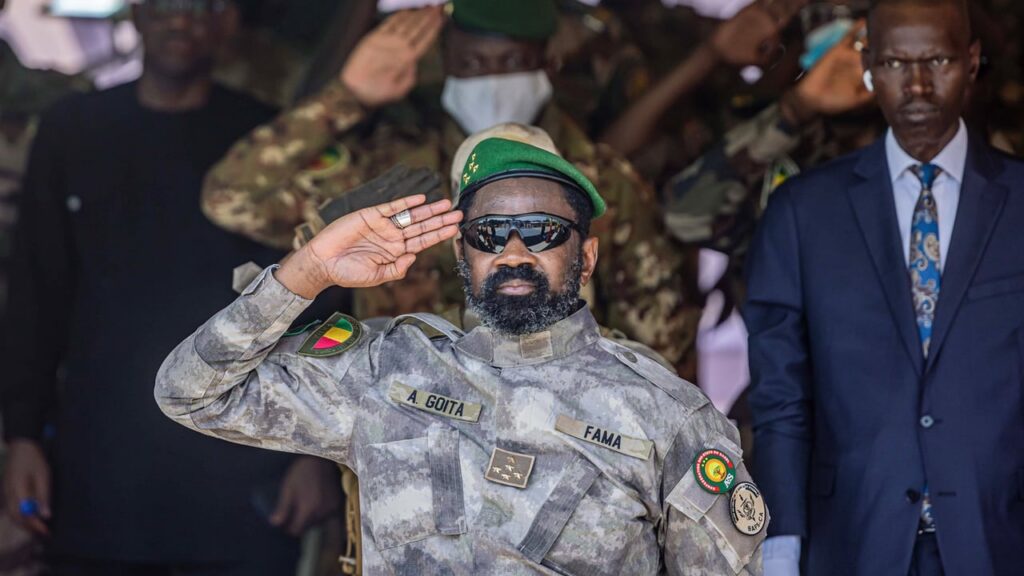

In Bamako, the political landscape remains as tense as ever. At the heart of this upheaval stands Assimi Goïta, the military leader who has steered Mali through turbulent waters since his rise to power. His grip on authority continues to shape the nation’s trajectory, even as internal and external pressures mount.
From coup leader to head of state
Assimi Goïta’s journey to the presidency began with a decisive intervention in 2020, when he played a central role in ousting former President Ibrahim Boubacar Keïta. Initially seen as a transitional figure, he quickly consolidated power, suspending elections and extending military rule. Critics argue this move was necessary to stabilize a country grappling with insurgency and political instability, while opponents view it as a power grab that undermines democratic progress.
By 2021, Goïta had solidified his position, first as vice president under Bah N’Daw and later as the de facto leader. His authority was further cemented when he orchestrated another coup, removing N’Daw and his government. Since then, he has maintained control through a combination of military support and strategic alliances, though his leadership remains a subject of intense debate.
Navigating a fractured nation
The challenges facing Goïta’s administration are formidable. Mali’s security situation has deteriorated, with armed groups like the Groupe de soutien à l’islam et aux musulmans (JNIM) intensifying their attacks across the country. Despite partnerships with international forces, including regional coalitions, the government struggles to regain control over vast territories.
Domestically, public discontent simmers. Economic struggles, coupled with allegations of human rights abuses by security forces, have fueled protests and eroded trust in the government. Goïta’s reliance on the military for legitimacy has only deepened divisions, leaving many questioning whether his rule offers a path to recovery or prolonged instability.
International relations under scrutiny
Goïta’s leadership has also strained Mali’s relationships with neighboring countries and global partners. The junta’s decision to sever ties with former allies and pivot toward new partnerships has sparked controversy. While some view these moves as necessary for sovereignty, others warn of increasing isolation and economic repercussions.
As Mali’s future hangs in the balance, Assimi Goïta remains a pivotal yet polarizing figure. His ability to navigate the country’s crises will determine whether Mali can achieve stability—or succumb to further turmoil.